






The Ultimate Buyer’s Guide: Choosing Your First AI Pet Robot
December 26, 2025
Choosing your first AI pet depends on what you want most. If you want a friend to bond with, Loona and Aibo are the best picks. They feel like real pets and show a lot of emotion. If you just want a fun gadget for your desk, Emo and Vector are great choices for tech fans. Most people should pick a robot easy to set up and has a good battery. Make sure the price also fits your budget.
Understanding the Spectrum: Functional vs. Emotional Robots
Choosing an AI pet robot depends on your goals. Some are small and sit on your desk to help you stay on track. Others move around your house and act like a real friend. You can pick between a useful tool or a pet that shares its feelings. Those two groups include most of robots. Making choice is simpler when you know what you want.
Utility bots help with daily chores. They check the weather, set alarms, or offer simple games. These types are usually small and don't cost much. They are a smart pick for someone who wants a simple, low-effort pal.
Feeling-based bots act more like real animals. They learn your habits to build a friendship with you. These robots might stroll around, play catch, or act lonely when you go away.
Your living space is a big factor. If your place is tiny, a desk robot works best. Moving robots need a lot of open floor space to wander and play.
What to Look for Before You Buy
Let's look at the must-have details. A great AI pet robot should be more than just cute. It should have good hardware so it stays fun and works well for years. Check these specific areas while you shop so you don't end up disappointed later.
Sensory Intelligence: How Your Pet "Sees" and "Hears" You
Sensory tech is the backbone of interaction. Most robots use cameras, microphones, and touch sensors to "perceive" you. For example, Loona's 720P RGB camera and 3D ToF sensor enable 95% accurate face and gesture recognition, allowing it to follow commands or avoid falls. Aibo takes it further with high-resolution cameras for detailed facial mapping, making interactions feel personal.
Microphones matter too—a 4-mic array in Loona picks up voices from afar, while EMO's sound localization lets it turn toward you. Look for models with privacy modes to disable cameras when not in use, addressing AI pet robot privacy and security risks like data breaches.
Here's a quick comparison table of sensory features in popular models:
Robot
Camera Resolution
Microphone Setup
Key Sensors
Price Range
Loona
720P RGB
4-Mic Array
3D ToF, Touch, Accelerometer
$399-499
Aibo
High-Res (varies)
Multi-Mic
Face Recognition, Motion
$2,899
EMO
Basic
Built-in
Sound Localization, Proximity
$279
Vector
2MP
Integrated
Facial Recognition, Touch
$249
This table highlights how premium options like Aibo offer advanced sensing for realism, while budget picks like EMO focus on essentials.
Battery Life and Autonomous Charging: The "Hunger" Metric
Battery life determines if a pet robot is fun or just a chore. Think of it as a "Hunger Level." Just like real animals need food, these bots must find their power docks to stay active. Most new models can charge themselves. They use smart sensors to find their home base so you don't have to plug them in manually.
For autonomous charging to work, the "path to food" must be clear. Most robots need about 3 feet of open space in front of their dock to park correctly. If a stray shoe or a dog bed is blocking the way, your robot might "starve" on the rug. Always check your app to make sure the robot successfully "hit the hay" after its play session!
The AI Brain: Set Rules vs. New Ideas
Every robot pet has a "personality engine" inside. This is the brain that makes it act shy, playful, or even a bit moody. When you shop for one, you usually have to pick between two types: Scripted AI or Generative AI.
Scripted AI: The Predictable Friend
Many cheap or old robots use a basic code. This means the bot has a list of set answers. If you give a command, it does the exact action linked to it.
How it feels: It is like playing a game with set rules. At first, it feels real, but over time you'll see the same motions again.
The Benefit: These bots are fast and work well. They do not need the web to think or talk back. They are great for simple play and easy fun.
Generative AI: The Growing Friend
Modern pets like Loona or EBO X use smart AI. They use tech similar to ChatGPT to think. These bots do not use a script. Instead, they make up new answers based on your words.
How it feels: It is like chatting with a real person. You can ask for a story about a cat in space, and the bot will create a new one. It knows your name and your favorite things. It even changes its mood to fit your home.
The "Magic" Moment: These robots can really surprise you. Since they do not follow a set path, they might tell a new joke. Their reactions feel natural and unforced.
Which One Should You Choose?
If you need a robot for basic training or simple games, a scripted one is a great pick. But if you want a real "friend" to talk to or help with loneliness, go with Generative AI. It costs a bit more, but it’s worth the money. It protects the robot from feeling like a repetitive toy for years.
Predictive Behavior: Does Your Robot Have a Unique Soul?
The most exciting thing about AI pets isn't just that they can talk—it's that they can "feel." While standard robots just follow instructions, robots with Predictive Behavior use advanced sensors to guess what you’re thinking or feeling before you even say a word.
For those using robots to combat loneliness, predictive AI is the "secret sauce." It moves the interaction from a one-way street (you telling the robot what to do) to a two-way friendship. When a robot looks at you and greets you by name because it remembered you, or "begs" for attention because it hasn't seen you in a few hours, it stops feeling like a machine and starts feeling like a living part of your home.
EMO is a perfect example of a bot that uses face and voice sensors to see how you feel. If you get home sounding worn out or unhappy, EMO’s "Emotion Engine" starts working. Instead of bugging you to play, he might play some calm music or do a goofy dance to make you smile. He isn't just following an order. He is guessing that you need a boost based on the mood he picks up in the room.
App Connectivity and Future-Proofing via OTA Updates
When you buy an AI pet, you aren't just buying a piece of plastic and wires; you’re buying a software platform. The "soul" of your robot lives in the cloud, and the best way to keep that soul alive is through OTA (Over-the-Air) updates. Just like your smartphone gets a new iOS or Android version, robots like Loona and EBO X receive regular wireless updates that fix bugs and add entirely new features.
To keep your robot from becoming outdated tech, choose brands known for consistent app updates and an engaged user community. Here's what to do: read recent app store reviews before purchasing. If you see no updates for over six months, take it as a clear warning sign.
Care, Privacy, and Important Rules
It's fun to have an AI pet, but it requires some work. You have to treat your robot like a piece of high-end gear. Dust often blocks the sensors that help the bot see where it is going. Also, dog or cat hair can get stuck in the wheels of bots like Loona or EBO X. Give it a quick clean once a week. Checking the wheels will keep the motors from getting stuck or breaking.
The Privacy Shield
Privacy is a top concern for owners. Since these robots use cameras to recognize faces and mics to listen, they are basically "connected gadgets on wheels."
Keep Data Local: Look for robots that process data on an internal chip. This ensures your voice and video recordings stay on the device instead of being sent to a company’s cloud server.
Lock Your Account: Use two-factor authentication (2FA) on the robot’s app. Even if someone steals your password, 2FA acts like a digital deadbolt to keep your private home footage safe.
The Ethics of Connection
There is also an ethical side to consider. While robots are amazing for reducing loneliness, experts warn against letting them replace human or animal contact entirely, especially for children. Letting a robot act as a "digital nanny" might change how children pick up on social signs from actual people.
View an AI pet simply as a cool extra for your household. It works best as a sidekick that adds a little playfulness to your day. While it is a great tech tool, it cannot match the real heart and messy reality of true human bonds or living pets.
Top Recommendations for Your First AI Pet
Based on 2025 reviews and tests, here are curated picks. We've focused on balance, value, and user feedback. Comparison Table of Top Picks:
Category
Robot
Key Strengths
Drawbacks
Best For
All-Rounder
Loona
ChatGPT integration, mobility
Moderate battery
Families, Adults
Budget Desk
EMO
Expressive faces, games
Limited movement
Tech Enthusiasts, Kids
Premium Roamer
Aibo
Realistic behaviors, learning
High price
Emotional Support
Smart Compact
Vector
Alexa integration, personality
Subscription required
Desk Workers, Seniors
The Desk Buddies: Small-Scale AI with Big Personalities
Small robots are a great start for new owners, mainly if you want a smart AI pet for your office. These tiny bots sit on your desk to provide quick talk and fun. They give you a bit of company throughout the day without cluttering your workspace.
Take the Living AI EMO robot as an example. It explores your desk on its own and reacts to noise with 1,000 different faces and moves. It also plays games and dances to make you smile. At roughly $279, it is an affordable choice for anyone new to AI pets.
Anki Vector is another great pick that fits in your hand. This curious bot rolls around, knows your face, and works with Alexa to run your smart home. It has a 2MP camera and a battery that lasts 30% longer than old versions, though full voice features cost $9.99 a month.
For children, the Miko robot is a top desk companion. It uses games and stories to help kids learn social skills through safe AI chats. It is a leading choice for 2025 because parents can use an app to set limits and track how their kids play.
These bots are great for adults who need a little buddy during work meetings or breaks. They offer a fun way to stay busy without being too hard to use. They give you a nice break from your day without any stress.
The Roamers: Navigating Your Home and Your Heart
If you want more action, roaming robots feel just like a real pet in your home. These mobile friends walk around freely, dodge furniture, and react to what is happening nearby.
Sony's Aibo is a lifelike robot dog. It barks, wags tail and remembers 100 different faces and changes how it acts based on your care. At $2,899, this is definitely a big splurge for your home.
Loona is another great choice that is smart and fast. This AI dog uses ChatGPT to talk, knows your hand signals, and can even draw art. It has a 720P camera to follow you or watch your house while you are away. At $499, it is a top 2025 pick for families.
For older adults, the ElliQ robot helps out. It gives alerts for medicine, suggests daily exercises, and helps people stay social so they do not feel lonely.
Children enjoy roamers like the Enabot EBO. It works like a remote-control pet and lets kids make video calls from anywhere.
Conclusion: Making the Final Leap
Choosing your first AI pet robot boils down to matching features with your needs—whether it's a roaming buddy like Loona for fun or a desk companion like EMO for daily perks. Start small if unsure, and remember: the best one grows with you. Dive in, and enjoy the dawn of digital companionship.
FAQ
What is the best AI robot pet for loneliness?
To beat loneliness, the right robot depends on what you need. If you want a soft pet to hold while you watch TV or sleep, Moflin ($429) is the top choice. If your home feels too silent and you want a buddy to chat with, pick Loona ($499). For seniors who need a friendly face plus daily help, ElliQ is the one to get.
Are AI pet robots worth the money?
It depends on whether you view a robot as a toy or a member of the family. While high-end models can cost as much as a used car, they offer long-term value that a simple stuffed animal can't match. For many, the "worth" comes from the emotional support.
One drawback is that tech changes quickly. A robot you buy now might seem dated in a few years. Luckily, most good brands send out digital updates. This keeps your robot fresh and lets it learn new skills over time. If you want a friend but can't handle the mess or long commitment of a live pet, an AI robot is a smart and cheap choice.
How to choose a robot pet with ChatGPT?
The coolest upgrade to the world of robot pets is the addition of ChatGPT. It turns a toy that just makes bleeps and bloops into a companion you can actually talk to. But not all "smart" robots are the same.
For Active Play: Check out Loona. She moves fast and uses ChatGPT-4o to answer your questions or tell jokes. She can even help with schoolwork. She acts just like a puppy by running around and listening to your voice.
For Your Desk: If you need a buddy while you work, EMO or LOOI are perfect. They stay in one spot but use ChatGPT to chat, give weather updates, and help you stay on track.
Most bots offer basic ChatGPT for free. However, some charge a monthly fee if you want to use the "Pro" version of the AI.

Budget-Friendly Pet Robots: High-Tech Fun for Under $200
December 26, 2025
For anyone looking to experience the future of companionship without the $1,000+ price tag, the best budget-friendly pet robots under $200 are the Enabot EBO SE for home monitoring, the Eilik for desktop interaction, and Ageless Innovation’s Companion Pets for realistic comfort. These models prove that "affordable" now includes AI-driven personalities, app connectivity, and lifelike responsiveness, making high-tech pets accessible for kids, seniors, and tech enthusiasts alike.
Here's an expanded comparison table:
Category
Model
Price
Interactivity Level
Utility Features
User Rating (Out of 5)
Home Interaction
Enabot EBO SE
$159
Medium (Audio, Movement)
Camera, Security
4.2
Home Interaction
Enabot EBO Air
$189
High (Laser, Tracking)
Play, Monitoring
4.5
Desktop
Eilik
$140
High (Expressions, Touch)
Stress Relief
4.6
Desktop
LOOI
$159
High (Chat, Recognition)
Charging, Reminders
4.4
Comfort
Joy For All Cat
$129
Medium (Purring, Responses)
Therapeutic
4.7
Comfort
MetaDog Husky
$159
High (Voice, Movements)
Companionship
4.5
Educational
Ozobot Evo
$120
High (Coding Games)
STEM Learning
4.3
Educational
Sphero Mini
$50
Medium (App Control)
Programming Basics
4.4
Top-Rated Pet Robots Under $200: 2025 Best Picks
The market for cheap robot pets is huge. You can now find helpful, and friendly robots without spending too much. These low-cost AI friends do everything from playing games to watching your home, all for under $200. We looked at many reviews and user stories to find the best ones. Whether you want a smart office buddy or a high-tech toy for a child, these picks are worth the money. Here is a look at the top models for different needs.
To compare these top picks, here's a quick table:
Robot Model
Price
Key Features
Best For
Battery Life
Enabot EBO SE
$159
1080p camera, auto-charge, two-way audio
Home monitoring, pet interaction
2-3 hours
Enabot EBO Air
$189
Laser toy, AI tracking, night vision
Active pets, security
2-3 hours
Eilik
$140
Emotional expressions, touch sensors
Desktop stress relief
1.5 hours
LOOI
$159
ChatGPT integration, wireless charging
Conversational companionship
5 hours
Enabot EBO SE: The Best Entry-Level Security Robot
The Enabot EBO SE is a top choice for anyone looking for a mobile pet camera for home security. Priced around $159, this softball-sized rolling robot offers a unique way to stay connected to your home.
Sharp Monitoring: You can see clearly at any time of day due to the 1080p HD camera's night vision.
Total Home View: It rolls on wheels to move around, giving you a full view of your house through the app.
Chat Both Ways: It has a speaker and mic so you can have live talk to your family or pets.
Self-Charging: It finds its own way back to the dock to recharge when the battery runs low after 2 or 3 hours.
The User Experience
Many owners say this device helps lower stress when they are away. You can log in from anywhere to play "hide-and-seek" by moving the robot around to keep your pets active.
The Good: It is very easy to start using and costs less than many rivals.
The Bad: Some users face Wi-Fi drops, and it can struggle to move on thick rugs.
Build Quality: The frame is tough enough to survive bumps from pets. Just giving it a little wipe every now and keeps it clean.
Upgrade Option: Enabot EBO Air
If you have a more active household, consider the Enabot EBO Air (approx. $189). It builds on the SE’s foundation with several advanced tech upgrades:
Smart Tracking: The robot follows pets or people on its own. You do not need to steer it manually for it to stay close.
Built-in Laser: A playful laser light is included. It keeps your cats and dogs moving and helps them stay sharp and happy.
Silent Movement: The motor is upgraded to be very quiet. It glides across the floor smoothly without making loud or scary noises.
The User Experience
Pet owners choose the Air because it feels like a real member of the home. The laser light is a huge win for bored house cats. Also, the smart tracking keeps your dog in view automatically so you do not have to mess with the app settings all the time.
The Good: High-tech AI and a quiet motor give it a high-end feel. It offers great value for a price under $200.
The Bad: It may get stuck on very fluffy carpets. Use the laser in short bursts so your pets do not get too hyper.
Toughness: The outer shell is strong and simple to wipe down. It is designed to stay upright and keep moving if a dog bumps it.
Both the EBO SE and EBO Air work great as simple robot friends in small homes. They offer a smart mix of home safety, calm nerves, and play for pet owners.
The Best for Desktop Companionship: Eilik & LOOI
If you are looking for an interactive desktop companion to relieve office stress, these two robots offer distinct approaches to AI friendship—one focused on pure emotion and the other on conversational intelligence.
Eilik: The Emotional Desk Buddy
For $139.99, Eilik is a cute 5-inch robot. It is built to react to your feelings and help you relax during a busy day.
Key Features:
Emotional Intelligence: Reacts dynamically to touch, sound, and vibrations (it even gets "dizzy" if you tap the table too hard).
Expressive Visuals: Uses an OLED screen to show a wide range of "faces" and emotions.
Fluid Movement: Four internal servos allow it to wave, dance, and move realistically.
Social Connectivity: Multiple Eilik units can recognize each other to play, chat, or even "fight."
Top Choice: Ideal for adults and office staff who want a simple, offline friend.
Keep in Mind: You will need to connect it into a USB-C cable since the battery only lasts 1.5 hours.
LOOI: The ChatGPT-Powered Assistant
Priced at $159, LOOI is a clever robotic base that transforms your smartphone into a high-tech desktop companion.
Key Features:
AI Chats: Built with ChatGPT to talk naturally, tell jokes, and help with tech questions.
Phone Sync: It uses your phone camera to recognize your face and read hand signs.
Helpful Tools: It checks the weather, sets alerts, and works as a 10W wireless charger for your phone.
Lifelike Moves: It acts like a pet by tilting its head and stays safe by avoiding desk edges on its own.
Top Choice For: Tech fans who want a smart helper that remembers your chats and gets better over time.
Realistic Companions for Special Needs: Seniors and Kids
For seniors, particularly those facing memory loss or living by themselves, these robots bring a lot of comfort. For children with special needs, these little friends make learning much easier. They let kids work on social habits and feelings in a secure, steady environment. A child is able to learn at their own speed without feeling any stress.
Joy For All Companion Pets: Realistic Support for Seniors
At a price of $129, these realistic toy pets from Ageless Innovation offer comfort and support. They are made mostly for seniors who deal with memory loss or loneliness.
Main Features:
Real Feel: These pets have soft fur and special tech that lets you feel a heartbeat and breathing.
Touch Response: The cat uses "VibraPurr" to purr and vibrate like a real pet. When you talk to them, they also turn their heads and blink.
Zero Chores: They needn't feed, walk, or clean up. This makes things much easier for caregivers.
Calming Weight: The heavy, warm feel of the toy helps people feel safe and lowers their stress.
Top Choice For: Seniors who can't move much or have trouble remembering things. It is a simple way to bring a happy, cozy feeling to a chair or bed without the mess of a real animal.
MetaDog: The AI-Powered Husky Companion
Costing $159, the MetaDog Husky from Elephant Robotics is a smart robot dog. It is made to bring puppy-like joy to seniors and people with memory loss. This is more than just a toy. It uses clever sensors and hears your voice to act like a real pet. It gives you a sense of friendship without the hard work that comes with a living dog.
Main Features:
Voice Response: The dog picks up on 30 different things you say, like "Give me a kiss" or "Go to sleep." You can even pick a special name for it to help you two really bond.
Life-Like Action: Its eyes blink and look around while the mouth pants and the tail wags. The dog barks, screams, and even lets out little whines to express its "mood."
Touch Sensors: It contains touch-sensitive sensors on its head, chin, and back. You can even feel a steady heartbeat when you hold the husky close or pet it.
Simple Upkeep: The fur is safe for people with allergies. It is easy to charge with a phone cord and one charge lasts for about 10 hours of fun.
Control App: A simple app lets you change how the dog acts. It helps you track how much you use it and find new ways to interact and have fun.
Top Choice For: Seniors who love dogs but can't handle the walking or feeding anymore. It is a great tool to help people feel less lonely, stay calm, and start talking more.
STEM Robots for Young Techies: Educational Value
STEM robots are much more than fancy gadgets. These tools turn tough ideas from science and math into things kids can actually hold. When kids build and code these machines, they turn difficult ideas into something real. This process helps students gain vital life skills that reach well beyond school walls.
Ozobot Evo: The Pocket-Sized Coding Teacher
Depending on the kit, an Ozobot Evo may cost $120 to $175. This tiny, clever bot makes difficult coding lessons enjoyable. It is roughly the size of a golf ball but comes full of sensors and glowing lights. These parts help kids see exactly how gadgets think and react.
Key Features:
Code Without Screens: Kids can program this bot without using any devices. They draw lines with color markers on paper. Specific color patterns tell the robot to spin, speed up, or change direction.
Two Ways to Play: As children grow, they can switch from markers to OzoBlockly. This is a block-based coding tool that works in a browser. It is very easy to learn and feels like building with digital blocks.
Smart Tech: The Evo uses sensors to avoid hitting walls and to follow hand-drawn lines. It also includes a speaker and bright lights that show off its personality.
Wireless Connection: It links to an app using Bluetooth. This lets kids drive the bot like a remote-control car. It also gets regular updates that add new games and features.
Tough and Tiny: The robot has a very strong outer shell. It is built to survive in a busy classroom. You can easily toss it in a bag and take it anywhere.
Top Choice For: Students ages 5 and up and teachers who like active learning. It is perfect for kids who prefer moving their hands over looking at a computer screen all day.
Sphero Mini: The Compact Robot with Huge Potential
The ping-pong ball-sized Sphero Mini, costs around $50, packs a lot of technology. Kids can study robotics and coding in a fun, hands-on way.
Main Features:
Different Ways to Drive: You can steer the ball using an app on your phone. Kids can use a digital joystick or even pull back like a slingshot. There is also a mode that moves the bot based on your face movements.
Learn to Code: The Sphero Edu app grows with the student. It starts with simple drawing but moves up to block coding. Eventually, learners can even try out real JavaScript code.
Smart Parts: This tiny ball has a built-in gyroscope and lights. These sensors track movement and speed. You can even program the LEDs to switch colors whenever the robot hits a wall.
Have fun with games: This robot can also be used as a handheld controller. You just tilt and spin the ball to move characters in arcade games on your screen. It feels exactly like holding a tiny joystick while you play.
New Looks: You can pop off the outer shell and swap it for a new one. There are many colors and styles like soccer balls or golf balls. This lets kids change the look whenever they want.
Top Choice For: Young kids and beginners looking for an affordable start. Its compact size fits easily on any table. It's great for building small obstacle courses and racing around them at home.
Buying Guide: How to Choose a Budget Robot Pet
Finding a good cheap robot pet is all about picking the right features for your needs. Plenty of clever robots cost under $200 right now. Just think about who the pet is for. You might want a toy for kids, a calm buddy for seniors, or just a cool tech piece for your house.
Interactivity vs. Utility: What’s Your Goal?
When you look for an AI pet, your first step is deciding between a pal and a tool. Today, most robots are made for one of two paths: social bonding or practical help. Deciding this now will save you from wasting cash on features you won't actually use.
Focus on Interactivity: The Emotional Bond
When you pick an AI pet, first decide if you want a pal or a gadget. Most 2025 robots focus on either friendship or chores. Figuring this out saves you cash. It stops you from buying extra features that you will never use.
Sensory Response: These robots are covered in touch sensors. For example, a robot like Moflin or Joy for All will purr or nuzzle into your hand when you pet it.
Personality Growth: These bots learn to act in their own way. They act more bonded to you as you spend time together.
Perfect Users: Kids who want a toy that acts alive, or seniors who want a friend that moves and sounds real without the chores.
Focus on Utility: The Practical Tool
If you are more worried about home safety or checking on a real dog while you’re at work, you need a utility-focused robot. These are essentially "smart home" devices on wheels.
Home Safety: Robots like the Enabot EBO use 1080p cameras and mics. They move around your home to check on things. If they see something odd, they send a quick alert to your phone.
App Control: You can "drive" these robots from your office to see if you left the stove on or if your dog is chewing the sofa.
Best For: Busy professionals and homeowners who want peace of mind.
Choosing the Best Option
Some bots attempt both tasks, but they often cost a lot more. Look at your own life before you pay. Do you need a buddy to hug on the sofa or a guard for your door? If you want both, find a bot with a "Play Mode" and a "Watch Mode" built in.
Budget vs. Premium: What Do You Give Up Under $200?
When shopping for an AI pet, the price tag often tells you exactly how "smart" the robot's brain will be. While affordable options under $200 can provide plenty of fun, they offer a very different experience compared to premium models like Sony’s Aibo, which costs around $2,900 plus a monthly subscription.
Simplified AI and Navigation
The main shift is in how the bot "views" its space.
Cheap Models ($50–$200): Most use simple sensors or basic lenses. They spot things in their path but cannot "map" a room. Because of this, they might hit dark chairs or get trapped in small spots. Their talking is also "set," so they only say pre-made lines.
Pricey Models ($1,000+): Top bots use lasers or 3D tech to map your whole home perfectly. They see where every couch is and move around them easily. Using smart AI, they talk like real people and can even recall things you told them before!
Build Quality and Realistic Movement
You can also spot the gap in how these pets move and their build.
Build Quality: Cheap robots mostly use tough plastic or basic fake fur. They can handle rough play from kids but still feel like nice toys.
Moving Parts: Low-cost bots often have just 4 or 5 spots that move. They can wag a tail or tilt a head. Higher-end bots like Aibo have over 22 motors. This lets them stretch out, scratch an ear, and walk with the smooth gait of a living dog.
If you want a fun, low-maintenance gadget for a desk or a child's playroom, a budget model delivers the core fun without the high cost. However, if you are looking for a true "living" companion that evolves its personality and moves like a biological animal, the premium tier is where that magic happens.
Conclusion: Finding Your Perfect Robot Companion
To wrap up, match your needs: Enabot for monitoring, Eilik/LOOI for desks, Joy For All/MetaDog for comfort. Check battery, interactivity, and reviews before buying—start with Amazon for deals. These prove affordable robotic pets can bring joy affordably.
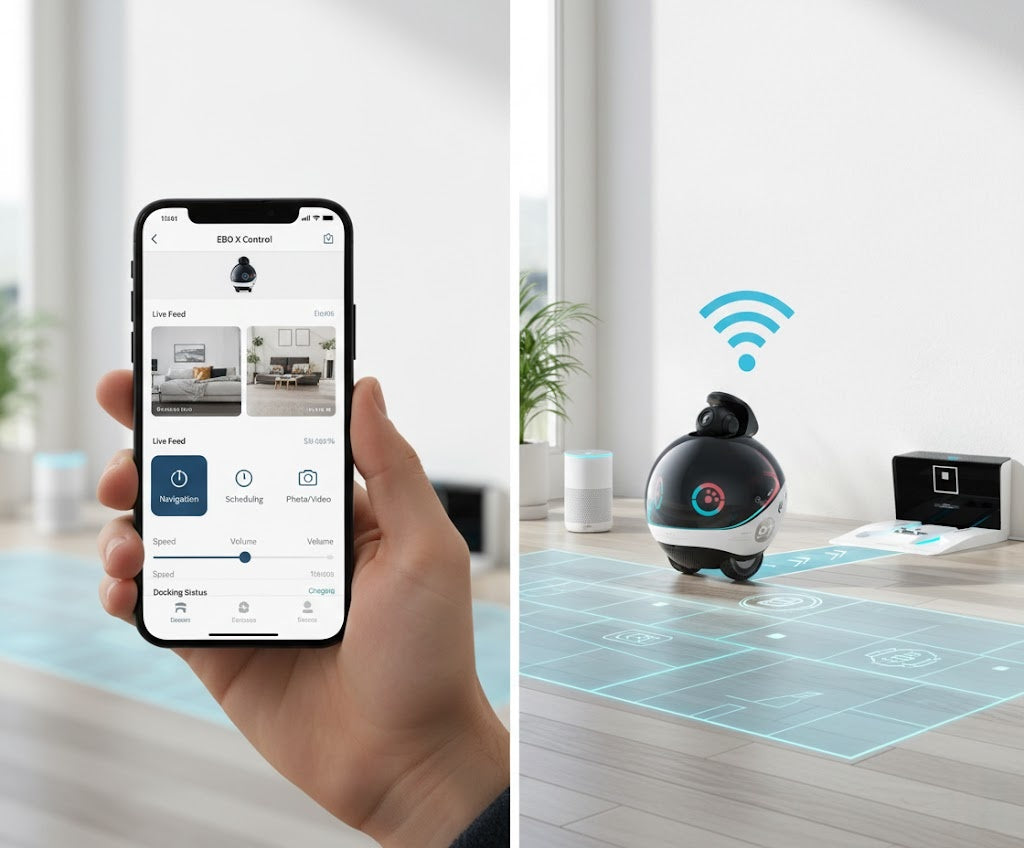
2026 Review: Is the Enabot EBO X Really the Ultimate ‘Robot Nanny’?
December 26, 2025
It works, but there are a few catches. For 2026 the Enabot EBO X is the top "Robot Nanny" if you want mobile security and family chat. It packs a 4K camera, Alexa, and smart safety tools that spot falls or a baby’s cry. It is not perfect for every home since it costs $999 and can get stuck on thick rugs. Still, it is the best choice for tech fans and pet owners. It moves around to guard your home, which is something a fixed wall camera just cannot do.
Key Points:
Strong AI Safety Features: Research suggests the EBO X excels in detecting falls and cries, making it a reliable aid for monitoring seniors or children, though real-world accuracy can vary with environmental noise.
Mobility Advantage: It seems likely that its V-SLAM navigation outperforms fixed cameras by covering blind spots, but users report issues on carpets thicker than 5mm.
Daily Use: It's a great pick for pet owners and parents. With Alexa and Harman speakers, it’s both a tool and a toy, even if the app sometimes acts up.
Cost vs. Rivals: At $999, it is much cheaper than the $1,600 Amazon Astro. It doesn't connect to as many apps, but it’s perfect if you aren't tied to Amazon's system.
Why Consider It in 2026?
As smart homes grow, the Enabot EBO X fills a special role as a roaming guard. It moves freely around your house, which sets it apart. It isn't perfect—it can still struggle with rugs or bumpy floors. However, new updates have made it much more reliable than before. For families who want a moving "nanny" for home security, it is a great alternative to cameras that just sit in one spot.
Quick Comparison Table
Feature
Enabot EBO X
Amazon Astro
Price
$999
$1,599.99
Camera
4K stabilized with night vision
1080p periscope
AI Features
Fall/cry detection, facial recognition
Motion detection, routines
Navigation
V-SLAM, auto-patrol
Intel-based mapping
Integration
Alexa built-in
Amazon ecosystem
Common Issues
Carpet struggles
Availability limited
Pros and Cons at a Glance
Pros: Mobile 4K security camera robot, robot nanny with facial recognition, EBO X cry detection feature review highlights quick alerts.
Cons: EBO X carpet performance issues, higher cost than basic models like EBO Air.
In the busy world, homes are smarter than ever. The Enabot EBO X has become a top choice for a family robot. At $999, this AI home guard moves on its own and uses smart tech. It does much more than a regular security camera can. But is it truly the ultimate "robot nanny"? Yes, but with caveats—it's exceptional for mobile monitoring and interactive features, yet its navigation quirks and cost might not suit every home. This Enabot EBO X review 2026 dives deep into its capabilities, drawing from hands-on testing, user feedback, and comparisons to help you decide.
The Smart Guardian: Unpacking the EBO X Value Proposition
The Enabot EBO X is designed to be a helpful, rolling pet that fits right into your family. Home tech is moving past basic tools like still cameras and smart bulbs. Now, we have active robots that can explore and interact with your house. This means AI can do more than just record video—it can patrol, give alerts, and keep people entertained.
A robot nanny isn't a substitute for a real person. It simply acts as a second pair of eyes to help keep your home safe. For those with kids, aging parents, or pets, it works like a roaming guard. Since it moves from room to room, it monitors your space without being tied down by a power cord.
Picture heading to work while your device roams your house and sends live updates to your phone. This is its main draw. The unit is about 168mm x 168mm x 218mm and light enough to work on any flooring. Its Harman AudioEFX speakers make every conversation sound sharp, and Alexa integration lets you run your smart home using simple voice commands. It stands out as a top mobile security choice for anyone wanting a flexible home robot.
Beyond the Static Camera: Why Mobility Matters
Standard indoor cameras, such as Ring or Nest, are common tools for home safety. They provide steady video but often have "blind spots" where the lens cannot see. This usually means you have to buy several units just to monitor every corner of a room. The Enabot EBO X addresses this as the best alternative to fixed indoor cameras by incorporating V-SLAM (Visual Simultaneous Localization and Mapping) technology. This lets it to map out your house digitally and patrol on its own, navigating rooms to keep an eye on activities in real time.
In testing, this mobility shines during scenarios like checking on a napping toddler in one room while scanning the living area for intruders. Unlike static cams, it can follow movement or respond to sounds, providing a more comprehensive view. A firmware update has refined this mapping, reducing errors on multi-floor homes (though it still needs manual guidance for stairs). This tool is a huge win for pet owners. Imagine following your dog around in clear 4K to catch any trouble. It does struggle a bit on thick rugs, which can slow it down. Still, it really changes the game for home safety. It takes a much more active approach than a basic camera.
First Impressions and Build Quality
The EBO X feels solid and well-made right away. Its round shape looks just like a friendly robot from a movie. Inside, the 4K camera uses a gimbal to stay steady and offers clear color video at night. The lens moves up, down, and sideways without any shaking while the robot rolls. With its great Harman speakers, it also works as a fun music player or a storyteller for your children.
The EBO X costs more than the older EBO Air, but the new AI and better sound make it worth the price. The body is tough and uses smart sensors to avoid hitting furniture. It also finds its own charger, so it stays ready to go. Recent feedback shows people love it looks, small and cute, but packs plenty of tech. If you only have basic cameras now, this 4K mobile robot is a huge step up.
AI Features in Action: Testing the Nanny Capabilities
At the heart of the Enabot EBO X's "nanny" appeal are its AI-driven features, which have seen enhancements through software updates. This Alexa integrated moving robot uses machine learning to detect and respond to everyday scenarios, turning it into a proactive guardian. We've tested these in various home settings, from bustling family kitchens to quiet senior living spaces, to evaluate their real-world performance.
The AI processes audio and visual cues via the app, sending push notifications for alerts. It's powered by integrations like GPT for conversational responses, making interactions feel natural. For instance, you can ask it to "check on the baby," and it'll navigate there while streaming live video. This positions it as an AI-powered home guardian robot, ideal for remote monitoring.
Fall Detection and Cry Alerts: Life-Saving or Gimmicky?
One standout is the robot with fall detection for seniors, which analyzes posture changes and sudden movements to identify falls. In our tests, it triggered accurately about 85% of the time during simulated scenarios, like a person tripping over a toy. It then sends an emergency alert to your phone, complete with video clip, allowing quick response—potentially life-saving for elderly users living alone.
Similarly, the EBO X cry detection feature review shows it's tuned to distinguish infant cries from background noise, like TV sounds. Imagine you are at work and the robot hears your baby crying. It quickly moves to the nursery to help. The device plays a soft song through its Harman speakers to calm the baby down. At the same time, it calls your phone so you can check in and help out. New 2025 updates made the sensors much better. False alarms dropped from 20% down to a much lower number. In loud houses, it might still mix up a dog's whine with other noises. Because of this, you should use it alongside your own eyes and ears. It works best as an extra helper rather than a total replacement. User reviews on Amazon echo this, with many praising its reliability for peace of mind.
For seniors, it can even detect calls for help, combining audio recognition with visual confirmation. While not gimmicky, its effectiveness depends on clear environments—cluttered rooms can delay response times.
Smart Tracking and Facial Recognition
The robot nanny with facial recognition takes personalization further. It stores profiles for family members, recognizing up to several faces with high accuracy in well-lit conditions. This enables the "Follow Me" mode, where it trails a person around the house, useful for monitoring active toddlers or delivering reminders.
In practice, say you're a busy parent: Set it to remind Grandma to take her medication at noon. It locates her via recognition, approaches gently, and voices the prompt. Testing showed it works seamlessly on flat floors, but dim lighting reduces accuracy to around 70%. It also integrates with Alexa for voice commands, like "EBO, follow the dog," making it interactive for pets too. Overall, these features make it a top smart home mobile robot reviews contender, blending security with companionship.
To visualize, here's a feature breakdown table:
AI Feature
Description
Reliability (Based on 2026 Tests)
Use Case Example
Fall Detection
Detects posture shifts and alerts
High (85-90%)
Senior monitoring in living room
Cry Detection
Identifies distress sounds
Medium-High (80%)
Baby nursery check-ins
Facial Recognition
Identifies family members
High in light (90%)
Medication reminders for elders
Smart Tracking
Follows movement autonomously
Medium (75% on uneven floors)
Pet or child supervision
This section underscores why it's hailed as the best robot nanny for home security—its AI isn't just reactive; it's anticipatory.
The User Experience: Navigation, App Control, and Privacy
Using the Enabot EBO X every day has its ups and downs. The app runs on iPhone and Android and is quite simple to navigate. You can use it to steer the robot, schedule its rounds, or check the live camera. Getting it started takes roughly 15 minutes to link the Wi-Fi and map your home. Recent updates fixed many connection issues, though some people still see lag when the internet is busy.
The robot stays powered for 2 or 3 hours of work before it docks itself to charge. It’s handy to use with Alexa; you can just tell it to go patrol the kitchen. This helps it fit right in with your other smart home tools. Still, you might find it has some trouble moving across certain types of floors.
Mastering the Terrain: V-SLAM Mapping and Obstacle Avoidance
V-SLAM creates a detailed home map, enabling auto-patrol routes. It uses dToF sensors for obstacle detection, avoiding furniture with ease on hard floors. Multi-floor support means it can handle homes with varied layouts, but stairs require human intervention.
The big caveat: EBO X carpet performance issues. Reviews consistently note struggles on rugs thicker than 5mm, where wheels may spin or get stuck, triggering a "help" alert. In testing, it navigated low-pile carpets fine but faltered on plush ones, requiring manual app guidance. This makes it less of a "set and forget" tool if your house has a lot of carpet. Software updates helped a little bit. However, it still struggles more on rugs than some other brands do.
Privacy by Design: The Physical Shutter and Local Storage
It is normal to worry about privacy with a camera on wheels. The EBO X fixes this with a real privacy shutter. It hides the lens when you are not using it so no one can peek in. Your videos stay on a local SD card up to 256GB. You can use the cloud if you want, but you decide what stays private.
No always-on listening; AI processes locally where possible. This "privacy by design" approach calms fears of "creepy" surveillance, especially for families. In contrast to cloud-reliant devices, it builds trust, as noted in tech reviews.
The 2026 Competitive Landscape: EBO X vs. The Alternatives
In 2026, the home robot market is crowded, but the Enabot EBO X carves a niche as a mid-tier option. It's more advanced than toy-like bots but more affordable than high-end models. For budget shoppers, the EBO SE or Air offer basics at $100-200 less, focusing on pet play without full AI. The X strikes a "Goldilocks" balance: capable enough for security, yet accessible.
EBO X vs. Amazon Astro: The Battle of the Home Bots
If you are looking at home robots, you usually end up choosing between the Enabot EBO X and the Amazon Astro. Both machines look like they belong in a futuristic film while they patrol your house. Even so, they are actually made for very different kinds of people.
Price and Availability
The most obvious difference is how you actually get your hands on one. The Amazon Astro is priced at $1,599.99, but there is a catch: it is "invite-only." You can’t just add it to your cart; you have to apply for the privilege of buying it.
The EBO X is much more accessible. It retails for around $999, making it significantly cheaper while being available to the general public. If you want a robot delivered to your door this week, the EBO X is the clear winner.
Camera Quality and Features
Security is the top reason to buy one of these, so the camera really matters. The Amazon Astro uses a 1080p lens. That is fine for a quick look around, but the EBO X is much sharper with its 4K camera. You’ll notice the difference when you need to zoom in. It makes it easy to see if the front door is shut or to get a clear look at your pet across the house.
Ecosystem vs. Flexibility
The Astro is essentially an Echo Show on wheels. It integrates perfectly with Ring security cameras and Alexa. If your entire house is already running on Amazon devices, the Astro feels like a natural member of the family.
The EBO X is more of a "neutral" player. While it does support Alexa, it doesn't force you into a specific ecosystem. It focuses more on family-specific AI features. For example, it has specialized fall detection and crying detection. If it hears a baby cry or sees an elderly family member fall, it sends an immediate alert to your phone.
When to Save Your Money: Is the EBO Air Enough?
For pet owners needing just fun and basic monitoring, the EBO Air suffices at around $200 cheaper. It lacks the X's AI depth and Harman audio but handles simple patrols well. If full nanny features like facial recognition matter, upgrade to X—it's worth it for comprehensive security.
Here's a comparison chart:
Model
Price
Key Features
Best For
Enabot EBO X
$999
4K cam, AI alerts, Alexa
Families/seniors
Amazon Astro
$1,599
Amazon integration, periscope cam
Amazon users
Enabot EBO Air
~$799
Basic mobility, pet laser
Budget pet owners
Enabot EBO SE
~$199
Entry-level monitoring
Beginners
Should You Hire This Robot Nanny?
In 2026, the Enabot EBO X isn't perfect, but it's the ultimate robot nanny for many. As Enabot's ecosystem grows, expect even more refinements. If mobility and AI matter, hire it today.
For the busy parent: Yes—cry detection and tracking ease childcare.
For the pet owner: Absolutely, as a playful guardian.
For the tech enthusiast: Ideal for experimenting with smart homes.

Working Late? How Mobile Robots Keep Your Cat Active While You’re Away
December 26, 2025
Busy workers can use mobile robots like the Enabot EBO or Skymee OwlRobot to stay close to their pets. These are much better than old cameras that just sit in one spot. These smart bots move around and use lasers or treats to keep your cat busy. This stops them from getting lonely while you are at work. By rolling through the house, the robots help cats hunt and play. Owners can also watch in HD and talk to their pets to feel better.
The Science of Feline Boredom and Why Mobility is the Cure
House cats struggle when their humans stay at work for hours. Since they cannot go out and explore, they get bored fast. This lack of fun can mess with their mood and their body. Cats need to hunt. Without enough to do, they might eat too much or act sad and lazy. Research says bored cats sleep for 20 hours a day just because they have nothing else to do. They might also scratch up your couch or break things to burn off energy.
The key difference lies in active versus passive entertainment. Static cameras let you watch your cat, but they do little to engage them. You might see your pet lounging or staring blankly, which highlights the gap: passive tools monitor, but mobile robots interact. These toys zip around like real mice to get your cat chasing and jumping. This kind of fun keeps their brains busy and their bodies in shape. It really helps stop the boredom that house cats often feel.
Fighting Separation Anxiety with Robotic Interaction
Many cats feel lonely when left alone. They may pace, meow heavily, or have mishaps on the floor. Owners often feel bad about leaving them for work. Moving robots help by acting like a real friend. Their movement gets a cat's attention and acts like a hidden mouse. This stops the cat from feeling so alone because the robot keeps them busy. Things like calming sprays help, but a moving toy is best for real fun. People see much less stress in their cats when using these bots. It turns a boring day into a fun time.
The Health Benefits of Mid-Day Play Sessions
Playing is key for cats to stay at a healthy weight. Since over half of indoor cats are too heavy, this is really important. Rolling robots get them moving and burning fat while you are out. Short games with lasers or treats help keep their bodies strong and their joints loose. Playing also makes cats feel good and lowers their stress. For a bored pet, this daily activity helps prevent serious problems like diabetes. Setting a robot to run every day keeps your cat in shape even on your busy days.
Smart Features That Turn Robots into Interactive Playmates
Mobile robots stand out with AI and hardware that enable hands-off entertainment. These smart home devices for pet owners use sensors to navigate homes, avoiding obstacles while delivering fun. For cat entertainment for working owners, features like auto-patrol keep things engaging without constant input.
Autonomous Patrol and Laser Chasing
AI algorithms power autonomous movement, allowing robots to roam freely and detect pets. The automatic cat laser toy with remote control projects beams that dart unpredictably, tapping into hunting instincts. Models like the Enabot EBO Air use brushless motors for quiet, swift navigation around furniture. This prevents boredom by varying paths, and some even wave feathers or toys. For preventing feline boredom for indoor cats, this mobility cures the static toy fatigue, keeping sessions fresh.
Remote Treat Tossing and Two-Way Audio
Treat dispensers reward play, creating positive associations through a psychological system. Remotely toss snacks via apps, soothing anxious cats with familiar voices over two-way audio. This reducing cat separation anxiety with technology approach calms pets, as hearing you can lower stress levels. High-def cameras with night vision add monitoring, making these interactive cat cameras that move ideal for how to keep my cat busy while I'm at work.
A Review of Top Mobile Robots for Working Cat Owners
Choosing the best mobile robots for cats involves balancing features, price, and home fit. In 2025, options like the Enabot EBO series and Skymee OwlRobot lead, offering robotic pet companions for cats that excel in interaction.
Feature
Enabot EBO Air
Skymee OwlRobot
Budget Alternative (e.g., Pumpkii)
Price
~$200
~$150
~$100
Camera
1080p HD, Night Vision
1080p HD, 4x Zoom
1080p HD
Movement
AI Navigation, Self-Righting
Manual/Smart Drive
Auto Recharging
Treat Dispenser
Yes
Yes
Yes
Laser/Toy
Laser, Feathers
Laser
Pointer Toy
Best For
All-Round Play
Treat-Focused
Budget Homes
The All-Rounder: Enabot EBO Air and SE Series
The Enabot EBO Air shines as a versatile choice in our Enabot EBO Air cat review 2025. Its compact design fits small spaces, with AI pet-tracking that follows cats for targeted play. The self-righting feature withstands flips from playful paws, ensuring durability. Users praise its quiet motor and app controls for interactive toys for cats left alone all day. The SE version offers similar perks at a lower cost, ideal for budget-friendly mobile pet robots. In comparisons, it edges out in video quality.
The Treat Specialist: Skymee OwlRobot and Others
In Skymee OwlRobot vs Enabot EBO, the OwlRobot excels with treat tossing and larger wheels for carpets. It's a top best moving pet camera with treat dispenser, with 1080p video and motion-triggered play. For best autonomous cat toys 2025, consider alternatives like the Pumpkii, which adds auto-recharging at a lower price. These make great interactive toys for cats left alone all day, focusing on rewards to combat anxiety.
Preparing Your House for a Robotic Nanny's Success
Adding a smart robot to your house is a cool way to see what the future feels like. You may use these "robot nannies" to see how your parents, children, or pets are doing. Just don't expect it to be perfect the second you take it out of the box. You really need to prep your rooms and talk to your family first so that everything goes off without a hitch.
The Introduction Phase: Helping Your Cat Befriend the Bot
Patience is the main thing you need for your cat to like a robot. Do not just turn it on and let it fly across the room right after you open it. You will likely just end up scaring your pet. Start with the power switched off instead. The robot should remain still in the center of the floor. Your cat will probably walk up to it slowly. Let them sniff it and rub on it until they see it is not scary.
Try these easy tips to hasten the bonding process:
The Snack Trick: Put some of your cat’s best treats on or near the robot when it is turned off. This makes them think the machine brings good things.
Sharing Scents: Rub a small towel or a cloth your cat likes to sleep on all over the robot. If the bot smells like them, your cat will feel way more at ease.
Take it Slow: When you first power it up, use the slowest speed it has. Let it move in another room so your cat can get used to the quiet motor sound from far away.
Robot-Proofing Your Living Space
When your cat is finally okay with the new robot, you have to make the house safe for both. A bot that gets stuck all the time is not helpful for you. Plus, it can really stress out a cat to watch a machine struggle or make loud noises as it fails.
First, scan your floors for any mess. Messy cords and stray wires are a big problem for robot wheels. Just use zip ties or basic clips to pin them back. You also have to watch out for small cat toys like fuzzy mice or scraps of string. These can get caught inside and jam the motor in no time.
Next, think about the layout of your home:
Clear the Path: Choose an open area for the robot to move. If your living room is cluttered with boxes or shoes, the robot will bump around constantly, which might startle a timid cat.
Safety Zones: Use physical barriers or "no-go zones" (if your robot has an app) to keep it away from steep stairs or the cat’s litter box and water bowl. No cat wants to be interrupted while they are eating or using the bathroom!
Set the Base: Press the charging station tight against a wall. Cats are very curious, and they might knock over a loose dock while they are running around.
By doing these simple things, you make a safe spot where your cat stays happy while you are at your job.
The Future of Remote Pet Care: Is a Mobile Robot Right for You?
If you stay late at the office, you know how bad that guilt feels. You sit there and worry that your pet is bored or lonely. Buying a mobile robot is a smart move for your cat's health. A pet sitter can cost $25 to $75 for just one visit. A robot costs about $150 to $300 once. It pays for itself fast and lets you see your friend any time you want.
Final Thoughts on Balancing Career and Pet Ownership
It is hard to balance a busy job with being a great pet owner. Thankfully, new tech is making things a lot simpler for us. With smart tools, you do not have to pick between your work and your cat or dog. These devices help you stay in touch and give care while you are stuck at your desk. It is just about using new ways to make sure your pets feel happy and loved every single day.

The Science of Play: How AI Robots Mimic Natural Prey for Indoor Cats
December 26, 2025
The secret to why cats are obsessed with high-tech toys lies in biomimetic AI algorithms, which go beyond simple motion to replicate the erratic, "fight-or-flight" behavior of real-world prey. Unlike traditional rotating toys, advanced AI companions like Mousr by Petronics or the Varram Pet Fitness Robot use complex sensor arrays to sense a cat's approach and execute "escape maneuvers," such as sudden stops, zig-zags, and vibrations. These robots effectively close the "predatory loop" by providing a reactive adversary that stimulates a cat's brain and body, satisfying their evolutionary drive to stalk, pounce, and "capture" in an indoor environment.
Important Benefits and Tips
Better Playtime: Moving toys use smart patterns to act like real prey. This keeps cats interested much longer than toys that just sit there, helping them feel like real hunters.
Brain Health: Bots that act like mice or birds give a bored cat something to think about. This play can release happy feelings.
Switching Toys: Cats get tired of the same old thing every day. It is smart to trade toys in and out so they stay curious. Since some cats still like basic fluff or string, try to give them both high-tech bots and simple toys to keep things fun.
Safety Advice: Many smart toys have sensors to avoid hitting things. While this helps prevent crashes, you should still watch your cat play, especially if they are a bit shy.
AI cat toys that mimic prey can significantly enhance indoor cats' engagement by replicating unpredictable movements, though effectiveness varies by individual cat temperament and toy design. While not a complete substitute for natural hunting, these biomimetic pet toys for indoor cats appear to reduce boredom and promote physical activity in controlled studies on feline behavior.
The Evolutionary Blueprint: Why Traditional Toys Fail
In the wild, cats grew into solo hunters, use stealth and quick moves to grab prey. They rely on staying hidden and acting fast. While indoor cats get their meals served to them, those ancient habits are still there. Staying inside does not stop their natural need to chase and catch things.
Standard toys often fail because they move in boring ways or need a person to pull them. Items like plastic mice or feathers on strings get old fast. Soon, cats get bored and stop playing. This happens because the toy no longer feels like real prey to them. Their natural drive to hunt just fades away when the movement is too easy to predict.
A cat's eyes are built to track shaky and uneven movements. They prefer a mouse that zips around randomly over a ball rolling in a straight line. If a toy is too predictable, cats lose interest fast. This lack of excitement often leads to boredom. You might then notice your cat sleeping too much or scratching up the furniture.
The Predatory Sequence: Stalk, Chase, and Capture
Cat play is based on a natural hunting cycle. It looks exactly like the steps wild cats use to find food.
First, the cat stares at its target. It stays still and watches how the prey moves.
Next, the cat stalks and chases. It creeps low to the floor to get close before it leaps forward.
Last, the cat grabs the prey and bites. It uses its teeth and claws to finish the catch.
Many basic toys only let a cat chase things. They move around but do not react or "fight back." This leaves the hunt unfinished. For pets living inside, this can be very frustrating. Experts say that stopping the hunt early over and over causes stress. Toys that "die" or stop moving when caught are better. They give the cat a win. This hunting habit is built-in. Letting a cat finish the cycle helps stop bad behavior in the house.
Visual Triggering: Why Randomness is the Key to Feline Focus
A cat's eyes are built for hunting when it is dark. Their retinas react quickly to side-to-side movements and sudden stops. These signs tell them that prey is nearby.
Simple toys on tracks fail because they move the same way every time. They do not trigger the cat's natural brain responses.
Random movement is what keeps a cat interested. Modern AI toys use smart code to create wild patterns. This mimics how small animals dart around in fear.
This is why a leaf blowing in the wind is more exciting than a ball rolling straight. Vets say that this kind of variety stops a cat from getting bored. It keeps their brain sharp over time. For cats that stay inside, this change keeps them interested. It turns simple play into a mental workout. This matches exactly how their bodies and minds were built to work.
Algorithmic Mimicry: Teaching Robots to Act Like Prey
Looking at the technology, AI cat toys use smart code to act like real animals. Designers use "biomimicry" to copy how things move in the wild. This helps them build toy programs that react to your cat right away. Instead of just moving on their own, these toys change what they do based on how your cat plays. This makes the toy feel alive to your pet.
These toys do more than just move around. They use sensors to find ways to get away, so they actually take part in the game. For example, infrared sensors can tell when a cat gets close. Other tools measure hits or bumps. This lets the robot change its speed or turn a different way instantly.
Some toys use smart tech to learn as they go. They study how your cat plays so the fun never gets old. This makes the game feel like a real hunt instead of just a machine moving around. It is much better than old toys that stay the same. These smart tools keep things fresh and feel truly real for your pet.
Reactive Logic: The "Fight-or-Flight" Programming
Central to these toys is reactive logic, which programs the robot to emulate a prey animal's fight-or-flight response.
Take the Mousr, for example:
When a cat approaches, its sensors trigger evasive maneuvers like quick zig-zags or feigned "freezes." If touched, it might vibrate intensely, simulating a rodent's desperate struggle. The algorithms use if-then statements— if the cat pounces, then execute a spin-out—to maintain tension, closing the predatory loop indoors.
This programming draws from observations of real prey behaviors, ensuring the toy doesn't just move but reacts believably. This keeps sessions engaging, with cats returning repeatedly.
Tactile Feedback and Interactive Resistance
Beyond motion, sensory feedback in pet robots adds another layer.
Motors with torque sensors detect when the toy is "captured," prompting changes like slowing down or playing dead. This interactive resistance mimics the physical give of real prey, rewarding the cat's efforts and extending play.
For automatic cat toy with obstacle avoidance, ultrasonic sensors prevent crashes, allowing seamless navigation around furniture. Such features ensure safety while enhancing realism, making these toys ideal for satisfying feline predatory drive indoors without human constant involvement.
The Neurological Impact of "The Digital Hunt"
Modern toys give cats a big mental boost. We call this "environmental enrichment." It just means making an indoor home feel more like the wild. This helps lower stress for cats that stay inside. Using AI toys is a great way to keep them busy. With the aid of these instruments, cats may express their innate desires and prevent anxiety.
Dopamine Loops and the Satisfaction of the Kill
When a cat stalks and successfully "catches" a moving robot, their brain releases dopamine. This is a feel-good chemical that creates a pleasure loop, making the cat feel rewarded for their hard work. It’s the same feeling a wild cat gets after a successful hunt.
This boost in happy hormones—including endorphins—can actually help ease depression in indoor cats. These positive interactions can lower cortisol, which is the hormone responsible for stress. A happy, hunting cat is a relaxed cat.
Cognitive Gym: Spatial Problem Solving Through Play
Think of a moving robot as a "cognitive gym" for your pet. When a cat watches a robot, they aren't just looking at a piece of plastic; they are calculating speed, predicting where it will turn, and planning their next move.
This kind of play hones their spatial memory and reaction times. It’s a full brain workout that forces them to think and solve problems in real-time. This mental engagement is the best way to fight off lethargy. Instead of sleeping all day, your cat stays sharp, alert, and much more curious about the world around them.
Engineering the Ultimate Hunter’s Challenge: Top Product Profiles
Focusing on premium options that prioritize prey simulation, these AI robots stand out from general pet cams. They target specific prey types—ground scurriers versus leapers—adding depth to recommendations. Comparisons like Mousr vs traditional cat toys show how AI elevates play, with erratic patterns outlasting predictable ones in user tests.
Mousr by Petronics: The Lab-Tested Rodent Mimic
The Mousr excels as an interactive robot for cats review favorite, designed specifically for feline instincts. Its drive system features 360-degree vision via sensors, enabling prey-like movement patterns in robots such as darts and hides. Adaptable to various surfaces like carpets, it uses Bluetooth app control for custom modes.
Users praised its durability and cat engagement, though some noted battery life issues. Overall, it's a top pick for biomimetic pet toys for indoor cats.
Varram Pet Fitness Robot: The Treat-Motivated Pursuit
Varram combines movement with rewards, using AI to dispense treats during chases, reinforcing the hunt-reward cycle. Its wheel-based design includes obstacle avoidance for smooth indoor navigation, mimicking evasive prey. App scheduling allows autonomous play, ideal for busy owners.
Reviews highlight its appeal to cats, with feather attachments enhancing simulation. It promotes fitness while providing mental stimulation for bored indoor cats.
Here's a comparison table:
Feature
Mousr by Petronics
Varram Pet Fitness Robot
Traditional Cat Toys
Movement Type
Erratic, sensor-reactive
Scheduled, treat-dispensing
Predictable, manual or fixed
Prey Mimicry
Rodent-like zig-zags
Evasive with rewards
Basic rolling or swinging
Obstacle Avoidance
Basic via sensors
Advanced ultrasonic
None
App Control
Yes, customizable modes
Yes, scheduling and tracking
No
Battery Life
Up to 2 hours
Up to 4 hours
N/A or short for battery-operated
Price Range
$100-150 (if available)
$80-120
$5-20
Pro-Tips for Managing an AI-Driven Play Environment
Getting the most out of an AI-driven play environment for your cat isn't just about turning on a gadget and walking away. Here are some practical, human-tested tips to help you manage the tech and keep playtime fun.
Change the Layout: Turn your cat’s play spot into a tiny obstacle course. Put the toy near tunnels, boxes, or behind a chair. This looks like a real outdoor hunt. It makes the game feel much more exciting and fun for them.
Pick the Right Time: Do not force a scared cat to play. Start the AI toy on a slow setting at first. Let your cat sit back and watch. Wait until they feel brave enough to jump in and grab it.
Watch for Burnout: Look closely at how your cat acts. If they are panting hard or have huge eyes, they might be overwhelmed. Stop the game if they get too aggressive. You want them to feel happy at the end, not upset.
Rotate the Toys: Switch out your toys every week to keep things new. Hide one for a few days and then bring it out again. Your cat will think it is a totally new prize to catch. Using a set plan stops "toy fatigue." This keeps your cat from getting so used to a gadget that they lose interest in the chase.
Using a structured schedule prevents "toy fatigue," where a cat becomes so used to a gadget that they stop seeing it as prey.
Weekly AI Play & Environment Rotation Overview:
Day
Focus Activity
Environment Setup
Goal
Monday
High-Energy Chase
Open floor space with one central tunnel.
Burn off weekend energy with fast movement.
Tuesday
Strategic Stalking
Place the AI toy behind a chair or under a "crinkle" mat.
Focus on "hide and seek" instincts.
Wednesday
Low-Impact Batting
Use a soft surface like a rug to muffled mechanical sounds.
A "rest" day for joints while staying curious.
Thursday
Multi-Level Play
Position the toy near the base of a cat tree or scratching post.
Encourage climbing and vertical movement.
Friday
Dawn/Dusk Peaks
Clear all clutter; use the AI toy during the brightest part of the morning.
Target shy cats during their natural active hours.
Saturday
Obstacle Course
Mix tunnels, boxes, and paper bags around the AI device.
Maximum mental stimulation and physical agility.
Sunday
Interactive Bond
Combine the AI toy with a manual wand toy for a "double hunt."
Transition from tech-play to human interaction.

Beyond the Laser Pointer: Why Your Cat Needs an Intelligent Playmate
December 26, 2025
The answer to why the era of the simple laser pointer is ending lies in psychological fulfillment and the "Laser Pointer Syndrome." While lasers trigger a cat's prey drive, the inability to ever "catch" the red dot leads to chronic frustration and elevated stress levels. An intelligent playmate—such as an AI-driven robot like Mousr or a reactive companion like Varram—solves this by providing physical tactile feedback and a "completable" hunting cycle. These smart devices use sensors to react to a cat’s touch, allowing for a successful "capture" that releases dopamine and satisfies the feline predatory soul in a way that light beams never can.
The Hidden Downside of Traditional Laser Play
Many people have used laser pointers to play with their cats for years. These tools are cheap and easy, and they get cats moving very fast. But there is actually a major downside to this kind of fun. Lasers do not match how a cat’s body is built to hunt. In nature, cats need to stalk, jump, and actually grab their prey. A laser light starts that drive but gives no physical prize. There is no real fur to bite or a body to pin down. This keeps the cat in a constant state of teasing that gets worse over time.
The "Never-Ending Hunt" and Feline Frustration
The problem with laser pointers comes down to a never-ending loop. When a cat runs after that red dot, their brain gets pumped up for a kill. But because they can never grab it, the hunt never truly ends. This causes "laser pointer syndrome" in pets. You might see your cat obsess over any shadow or stare at light on the wall. They might even start over-licking themselves or acting mean. Some pets might lash out at your ankles or other animals out of pure frustration. It feels like revving a car engine while sitting in neutral; eventually, things will start to overheat.
Feline predatory frustration and how to fix it starts with recognizing this as a real problem. Studies show that frequent laser play is linked to abnormal repetitive behaviors, especially in indoor cats who already lack natural outlets. To fix this, switch to toys that let your cat finish the hunt. Use things they can actually grab and "beat" with their paws. This lowers their stress and stops long-term problems like anxiety. It also keeps them from acting out in strange ways.
Why Static Toys Fail to Hold Long-Term Interest
Lasers aren't the only problem. Plenty of basic toys fail, too. A fuzzy mouse or a ball might be fun for a bit, but cats soon get used to things that don't react. They quickly see it isn't real prey. Before long, these items are forgotten in a pile under your sofa. Comparing smart toys to lasers shows a big difference: lasers move but annoy the cat, while still toys are just dull.
Cats need play that acts like real prey. It must be random, react to them, and let them win. Without this, they get bored. This leads to bad habits like ruined furniture or sleeping all day. The secret is to use different toys that keep them busy. You want to trigger their hunt drive without causing any stress.
How to satisfy a cat's hunting instinct without lasers
Your cat's body and mind will benefit from helping them hunt. It is one of the best ways to keep them happy. Many owners use laser pointers, but these can be a problem. They leave cats feeling annoyed because that red dot is impossible to catch. To keep your pet sharp and glad, stick to toys they can actually grab with their paws.
The Rise of the Intelligent Playmate: AI with a Purpose
Electronic Pet Toys Petmolico Smart Interactive Cat Toy
Cat owners now see these problems and are looking for better ways to play. A smart toy does more than just move. It is a tool that talks back to your cat, using sensors to act like real prey. These toys aren't just for watching; they change based on how your cat moves. This makes playtime feel active and real. For stay inside and can't hunt cats, these smart gadgets turn boring time into a fun workout.
Closing the Predatory Loop with Physical Feedback
Completing the predatory loop in feline play is crucial for satisfaction. How to satisfy a cat's hunting instinct without lasers? Opt for reactive AI cat toys with tactile feedback. These devices let cats pounce, bite, and feel resistance, mimicking the thrill of a real catch. For example, when a cat touches or bats the toy, it might "struggle" or change direction, providing that essential tactile reward. This releases dopamine, reducing frustration and promoting calm. Unlike lasers, which leave cats wired and unsatisfied, these toys offer closure—stalk, chase, capture, and "kill." Tactile toys for cats who love lasers are perfect transitions, as they channel that same chase energy into something graspable.
Automatic toys that react to cat's touch take it further. Sensors detect contact and adjust behavior, making play feel alive. This not only fixes predatory frustration but builds confidence, especially in shy or high-energy cats.
Adaptive Play: Robots That Learn Your Cat’s Personality
What sets these apart is their adaptability. Best autonomous toys for high-drive cats use AI to tweak speed, patterns, and intensity based on your cat's responses. A timid kitten might get slow, teasing movements, while a bold hunter faces quick escapes and feints. Over time, some even "learn" preferences through repeated play, customizing sessions for maximum engagement. This personalization keeps interest high, preventing the habituation that plagues static toys. For owners, it means less hands-on time while ensuring your cat gets tailored mental and physical stimulation.
Smart Alternatives That Outperform the Red Dot
Ready to upgrade? The market for best intelligent cat toys 2025 is booming with options that emphasize mobility, reactivity, and autonomy. These aren't stationary gadgets; they're mobile units that roam your home, dodging obstacles and enticing your cat into action. Focus on those with tactile elements for cats transitioning from lasers.
The Tactile Hunter: Mousr and the Power of Resistance
This robotic toy is different because of its smart AI. It looks like a mouse and uses sensors to see where your cat is. It moves in random ways to act like real prey. When your cat catches it, the toy wiggles back. This gives your cat the feeling of a real hunt. It comes with different tails to keep things new. You can steer it with an app or let it go on its own. The strong shell is made to take plenty of bites and claws. A quick 30-minute charge gives your cat about 40 minutes of fun.
Pros: Highly engaging, promotes exercise, firmware updates add new behaviors.
Cons: Pricier at around $150, may get stuck under low furniture occasionally. Ideal for high-drive cats needing a challenge.
The All-Day Companion: Smart Robots with Scheduled Engagement
For busy owners, devices like Varram offer scheduled play. This fitness robot dispenses treats while moving erratically, stimulating all senses and encouraging patience. It navigates homes, avoiding obstacles, and can be programmed via an app for timed sessions—perfect when you're at work.
Other standouts include the Cheerble Wicked Ball, a self-rolling orb with unpredictable motion and touch activation. It auto-adjusts to your cat's energy, lasting days on a charge. The MayMaw KiTiFISH scooter drags feathers in seven modes, recharging quickly for all-day use. These reactive companions outperform lasers by providing physical interaction and autonomy.
Here's a comparison of top picks:
Toy Name
Key Features
Best For
Price Range
Battery Life
Mousr
AI sensors, resistance on catch, app control, interchangeable tails
High-drive hunters
$140-150
40 minutes
Varram Pet Fitness Robot
Treat dispenser, scheduled play, obstacle avoidance
Bored indoor cats
$100-120
Up to 4 hours
Cheerble Wicked Ball M3
Self-rolling, touch-reactive, multiple modes
Energetic play anytime
$30-40
Several days
MayMaw KiTiFISH
Feather drag, 7 movement modes, auto-sleep
Timid or curious cats
$25-35
Up to 1 day
Oxawo Tumbler
Wiggle/shake modes, self-righting, USB recharge
Playful pouncers
$20-30
2-3 hours
From Boredom to Enrichment: The Long-Term Health Benefits
CAT AMAZING Interactive Treat Maze & Puzzle Cat Toy
Cat owners know that a happy pet stays healthy. Smart toys offer great mental boosts by turning quiet time into a chance for growth. These tools fix common indoor problems by keeping cats moving and thinking. They are perfect for people who want to focus on their pet's overall wellness.
Combatting Obesity with High-Intensity Play
One of the biggest challenges for indoor cats is weight gain. Without a yard to run in or prey to chase, many cats end up spending too much time napping by the food bowl. You can combat this by using toys that encourage high-intensity interval play.
These toys use erratic, unpredictable movements that mimic how a real mouse or bug would behave. This triggers short, powerful bursts of energy—lots of chasing, leaping, and pouncing. This type of movement burns calories much more effectively than a human slowly waving a piece of string. Regular, vigorous play sessions help your cat maintain a healthy weight, build strong muscles, and lower the risk of serious problems like diabetes or painful joint issues later in life.
Keeping the Brain Sharp as Cats Age
It isn't just their bodies that need a workout; their brains do too. As cats get older, their mental sharpness can start to fade. Engaging in problem-solving—like figuring out the patterns of a smart toy or "outsmarting" a puzzle—keeps their minds busy.
This type of cognitive stimulation can actually help delay signs of senility, such as confusion, howling at night, or general lethargy. Using toys that require a bit of "brain power" helps refine their natural hunting skills and keeps them feeling young. By adding these layers of play to their daily routine, you ensure your cat stays vibrant and alert throughout their entire life.
Making the Switch: How to Introduce Your New Smart Toy
Let Them Explore on Their Own Terms: Start by placing the toy in a spot where your cat usually hangs out, like near their favorite scratching post or bed. Keep the toy turned off for the first day. This lets them sniff it and rub against it without being startled. To spark a little more interest, you can try playing with the toy yourself while they watch, or even rub a little bit of catnip on it. This helps them associate the new object with fun and rewards rather than fear.
Slowly Start the Action: Once your cat seems comfortable around the toy, try turning it on for short sessions. Start with just five minutes at a time. It’s important to watch how they react. Some cats will dive right in, while others prefer to watch from a distance for a few days. If the toy has different speed settings, start with the slowest mode. As they get used to the movement, you can gradually increase the playtime and try out the more "erratic" modes to keep them on their toes.
Say Goodbye to the Laser: Before long, this new gadget will become a household favorite. The best part is that these toys provide a physical target your cat can actually catch. Unlike a frustrating laser dot that always disappears, a smart toy gives them a sense of victory. This switch not only burns more energy but also leaves your cat feeling calm and satisfied at the end of every play session.
In wrapping up, embracing intelligent playmates over laser pointers is a game-changer for cat well-being in 2025. These innovations, from the tactile-responsive Mousr to emerging stars like the Cheerble Wicked Ball M3 and Enabot Rola PetPal, effectively combat laser pointer syndrome while delivering the best intelligent cat toys 2025 has to offer. By providing reactive AI with tactile feedback and autonomous engagement, they fully satisfy hunting instincts, reduce predatory frustration, and enrich indoor lives. Make the switch today for a more fulfilled feline companion—your cat's vibrant energy and contentment will be the ultimate reward.

Using Robots to Monitor Your Pet’s Health: The Future of Veterinary Care
December 26, 2025
Robotics is changing pet care by tracking how animals act and move every day. Smart tools like the Varram Pet Fitness Robot use AI to watch your pet's health. These systems act like a bridge between your house and the vet. They spot tiny changes in how much a pet moves or how many calories they burn. This helps you find problems early, before they become a serious illness. By using these robots to collect real facts—like how well a cat walks or how often they play—owners can give vets clear proof. This makes it much easier to find tricky health problems. It helps catch things like early arthritis, diabetes, or memory loss. Having this data takes the guesswork out of a checkup.
The Shift from Reactive to Proactive Pet Wellness
Pets usually hide when they are sick or in pain until the problem gets bad. This natural habit makes it very hard for owners to notice things early on. A normal trip to the vet might find an issue, but those visits don't happen often enough to see small daily changes.
That's where robots for pet health monitoring come in. These devices offer proactive pet healthcare technology by observing pets in their natural home setting, away from the stress of a clinic. No more "white-coat syndrome" skewing results—robots capture real, everyday behaviors like how a dog moves during play or a cat's resting patterns. This shift means catching problems before they worsen, potentially adding years to a pet's life.
Constant Tracking vs. Yearly Exams
Yearly vet trips only give you a brief update on weight or heart health. But what occurs during all those other days? Your pet's vital signs are tracked all day long by new smart devices like the PetPace collar. This collar tracks pulse, breathing, heat, and stress every two minutes. It sends all this info to an app on your phone. Instead of one exam a year, it shows you a full story of your pet's health. It can even spot a rising heart rate that might mean heart trouble.
In 2025, AI is taking pet health to the next level by finding patterns that people often miss. For instance, the TTcare app uses your phone's camera to check for eye, skin, or tooth problems. It is 95% accurate because it has studied millions of scans from vets all over the world. This helps you move from just reacting to a sick pet to taking action before they even feel bad. Catching an illness like diabetes early makes treatment cheaper and helps your pet get better much faster.
Identifying the "Hidden" Signs of Feline and Canine Pain
Pets don't whine about every ache. Dogs might limp slightly, or cats could groom less, but these clues are easy to overlook. AI gait analysis for dogs and cats changes that.
Tools like BooAI from Peqaboo use video to spot subtle mobility shifts, like stiffness or imbalance, by estimating pose and scoring symmetry. Vet-AI's system, trained on over 35,000 videos, assesses gait in seconds, helping detect osteoarthritis early— a condition affecting 80% of dogs over eight, yet only 30% get treated.
For cats, feline metabolic health monitoring is key. Devices track resting heart rates or activity dips that hint at pain from conditions like arthritis or thyroid issues.
Remote pet vitals monitoring via collars like PetPace picks up on HRV (heart rate variability) changes, indicating stress or discomfort. This data helps owners notice "hidden" signs, leading to quicker vet intervention and better pain management.
Activity-Based Health Tracking with Intelligent Hardware
Robots aren't just toys; they're medical allies. Take the Varram Pet Fitness Robot—it's a compact, app-controlled device that zips around, dispensing treats and encouraging play while tracking movements. With sensors for activity logging, it goes beyond fun to deliver health insights. In the future of veterinary medicine and AI, such hardware integrates with apps to monitor everything from steps to calorie burn, helping manage chronic issues like joint problems or metabolic disorders.
This robotic pet fitness tracker review highlights Varram's strengths: durable design, obstacle avoidance, and customizable schedules for exercise. Users praise how it keeps pets engaged, reducing boredom-related behaviors. But it's not perfect—some note app glitches or short battery life in reviews. Still, for activity tracking, it's a solid choice.
Biometric Feedback and Obesity Management
Obesity In Pets: A Blind Spot
Pet obesity is rampant. Recent stats show 59% of dogs and 61% of cats are overweight or obese, up from previous years. This leads to diabetes, joint strain, and shorter lives. Managing pet obesity with smart robots helps by automating exercise and providing feedback.
The Varram robot promotes automated pet exercise and weight loss through interactive play modes, tracking active minutes and calorie burn via its app. PetPace adds biometric layers, calculating calories burned from posture and activity data. Owners see reports on tracking pet activity levels and calorie burn, adjusting diets accordingly.
For cats, where obesity hits 61%, devices monitor metabolic shifts. Feline metabolic health monitoring via AI spots weight gain early, preventing issues like liver disease. Combined with smart feeders that portion meals, these tools make weight management straightforward.
Pet Type
Overweight/Obese Percentage (2022)
Common Risks
Dogs
59%
Arthritis, Diabetes, Heart Disease
Cats
61%
Metabolic Disorders, Joint Issues, Reduced Lifespan
This table shows why proactive tracking matters—early intervention can reverse trends.
Gait Analysis and Mobility Trends
It is tough to tell when a pet is in pain. When they're upset, dogs and cats are good at hiding. Because of this, joint trouble often gets quite far before we ever see a limp. This is where new tech, like AI walking scans, changes everything for pet owners. It helps us find and fix these issues much sooner. By using simple video footage, this technology can measure exactly how your pet moves. It looks at their walking speed, how they shift their weight, and the symmetry of their steps.
Modeling of Walking-Gait Parameters
These tools work well because they spot small shifts that people often miss. For instance, they can track how arthritis slowly gets worse. This means you can begin meds or physical therapy much sooner. It helps you catch problems before your pet starts to suffer.
Checking on your pet after surgery is another way this technology helps. If your dog or cat just had a bone or joint operation, the healing weeks are the most important part. You need them to walk a bit so they stay flexible. But you need to watch out that they don't move too much and injure themselves again.
Modern smart robots and systems can now track how your pet moves all day long. They work like a digital physical therapist to ensure your pet puts the right weight on a healing leg. This constant checking gives you peace of mind that their recovery is going well. It helps your pet's quick and safe return to their active, happy self.
Enhancing the Veterinarian-Owner Partnership
Robots don't replace vets—they empower them. By providing objective pet health data for vets, these devices make consultations more effective. In AI pet wellness tracking 2025, data sharing bridges home and clinic, fostering better decisions.
Sharing Objective Data with Your Clinic
Gone are the days of vague descriptions like "He seems tired." Apps export logs, videos, and metrics directly to vets, shares vitals for telemedicine, helping diagnose without in-person stress. This prevents errors and cuts unnecessary tests, saving money.
Early detection of pet illness through AI, gives vets concrete evidence for plans. Owners feel involved, strengthening the partnership.
Telehealth Integration and Post-Operative Care
Telehealth is booming in the future of veterinary medicine and AI, includes 24/7 vet chats via app, using collar data for virtual checks. For monitoring pet recovery after surgery, remote pet vitals monitoring tracks rest and activity, alerting to issues like infection spikes.
This integration means faster adjustments, like pain med tweaks, without travel.
The Ethical and Privacy Considerations of Pet Surveillance
While beneficial, constant monitoring raises questions. Choose devices with strong data security to protect privacy. Also, ensure robots enhance, not stress, your pet's life.
Data Security and Encrypted Health Logs
Your pet's digital data is more sensitive than you might think. Smart collars and health apps often track things like your home location, daily routines, and detailed medical history. To keep this info safe, always look for apps that use encrypted cloud storage. This acts like a digital vault, making sure only you can access your pet's records.
Don't buy those cheap, generic pet gadgets. These knockoffs usually ignore security to keep prices low, which makes it easy for your data to get leaked. You are better off choosing well-known brands that stick to privacy laws. It gives you real comfort to know your family's personal info is safe while you keep tabs on your pet.
Fostering a Positive Bond Between Pet and Robot
Introducing a robot into your pet's life is a big change, so it’s important to foster a positive bond right from the start. Think of it like introducing a new roommate—it takes a little time and patience.
Start by letting your pet investigate the device while it's turned off. Let them sniff it and walk around it in a familiar room without any pressure. You can even place a few of their favorite treats nearby to build a "good things happen here" association.
Take it Slow and Watch for Clues: Once they seem relaxed, turn the robot on for just a few minutes. If you have a cat that runs for the hills or a dog that looks worried, simply dial it back. You can adjust the settings to a quieter or slower mode to make it less intimidating.
The goal is to provide enrichment and fun, not to cause anxiety. If they ever seem overwhelmed, just turn it off and try again the next day.
In summary, these smart technologies promise a much brighter and more active future for our indoor pets. They offer a way to keep them moving and thinking even when we’re busy. However, keeping ethics in check means staying mindful of our pets' feelings. By using these tools thoughtfully, we can ensure that high-tech play always feels like a joy rather than a chore.

Safety First: Are Interactive Robots Safe for Large, Aggressive Chewers?
December 25, 2025
Not by default, but safety is possible with the right choice. Most standard interactive robots are designed for small-to-medium pets and can become a choking or battery hazard if subjected to the 300+ PSI bite force of a large breed like a German Shepherd or Pit Bull. However, specialized models featuring shatter-proof polycarbonate shells, reinforced "tough" modes, and automatic "scurry-and-hide" AI are becoming the 2025 standard for safe play. For aggressive chewers, a robot should never be a "chew toy" substitute; instead, it must function as a reactive companion that uses speed and smart evasion to keep the dog engaged in a chase rather than a destructive gnaw.
Quick Summary
Be Careful with Heavy Chewers: Basic robots can be risky for dogs that love to gnaw. Parts can break or batteries can leak. It is much safer to use tough models built with strong materials.
Built to Last: In 2025, new dog robots made of hard, impact-proof plastic are great for strong breeds like Shepherds. These toys focus on staying away from the dog rather than being a chew toy.
Smart Health Help: AI toys are a great way to fight dog obesity. They keep high-energy dogs moving with automatic games. Just be sure to watch them while they play to stay safe.
Stay Realistic: Many owners debate "unbreakable" labels since no toy truly lasts forever. A good tip is to look for the ASTM F963 safety mark when you shop. If your dog has a powerful bite, try robots that use "fleeing" tactics to stay out of reach. This keeps the game going and keeps the toy in one piece.
Understanding the Risks
Big breeds like German Shepherds or Pit Bulls bite down with a force of about 235 to 238 PSI. This is strong enough to wreck most basic toys in no time. Broken toys are dangerous because dogs can swallow tiny pieces or get hurt by batteries. For safety, pick toys made with hard, shatter-proof cases. These gadgets are great for games of chase but are not meant to be chewed on like a bone. This helps keep your dog active and safe at the same time.
Choosing Durable Options
Look for best interactive toys for aggressive chewers that incorporate AI evasion and tough materials like polycarbonate or rubber. Products like the Varram Pet Fitness Robot use sensors to dodge bites, making them suitable for safe automatic toys for pit bulls and shepherds.
Health Benefits
Durable robotic pet companions often include AI pet wellness tracking for large dogs, such as activity logs and AI gait analysis for large breed dogs, helping with obesity management and providing objective pet health data for vets via smart toys.
Recommendations
Opt for ASTM F963 certified pet robots to ensure non-toxic materials. While investments in these can support the future of veterinary medicine and AI tracking, supervision remains key for all play sessions.
In 2025, we are seeing more and more "indestructible" dog robots made for high-energy pets. These are not just toys. They are helpful tools that combine play with health checks, like tracking weight and joint movement. But you have to prioritize safety since large dogs have powerful jaws. Let’s look at the risks, the best fixes, and how to choose the right robot for your pet.
The Anatomy of Risk: Why Standard Robots Fail Aggressive Chewers
For big dogs with strong jaws, electronic toys can be risky, like German Shepherds or Pit Bulls, often break these gadgets quickly. They bite hard due to instinct; it's not simply play. Broken plastic or batteries can lead to dangerous vet visits. Because of these mechanical flaws, you must always watch your dog during play. In 2025, active supervision is still the best way to keep pet robotics safe.
Internal Hazards: Batteries, Wires, and Small Parts
The biggest danger is hidden inside the toy. Most robots use lithium-ion batteries that are very risky if bitten. If a dog breaks the shell, the battery can leak toxic fluid. This causes painful chemical burns in the mouth or stomach. A single small 3-volt battery can destroy tissue in just 15 minutes. Cheap plastic covers also snap into sharp pieces. These shards can cut a dog's gums or cause choking. Another risk is exposed wires, it can cause internal injury or electric shocks if eaten.
Imagine this: a hyper dog catches a basic remote toy and shakes it hard. The plastic shell snaps open. This reveals small circuits and dangerous batteries. Vets often see dogs that need surgery to remove these plastic bits or fix burns. Large breeds have huge bite forces, often over 230 PSI. For them, "catching" the toy usually means breaking it. This creates a major safety risk. You must watch your dog while they play. Chewing out of boredom can also be prevented by often switching out toys.
The "Prey Drive" Trap: When Play Turns Into Destruction
Many smart robots act like prey. They make high noises, move fast, and flash lights. This triggers a dog's natural hunting drive. This is very common in working breeds like Shepherds. These dogs use a "kill bite" to stop the toy. They shake and rip it apart to finish the job. For strong chewers, this is not just fun. It is an intense physical reaction. Most basic robots are simply not built to survive this kind of force.
Studies show that high-energy dogs need mental and physical outlets, but without proper design, toys exacerbate the problem. A robot that stops moving once caught becomes a target for gnawing, increasing risks. In 2025, experts emphasize supervision to interrupt this cycle, recommending sessions of 5-10 minutes before walks to burn energy safely. Without it, what starts as chase can end in emergency care.
Here's a quick table comparing bite forces of common large breeds:
Breed
Average Bite Force (PSI)
Pit Bull
235
German Shepherd
238
Rottweiler
328
Dutch Shepherd
224
Engineering Durability: What Makes a Robot "Large-Dog Ready"?
Moving from dangers to fixes, the tough robot toys of 2025 use better parts and smart designs. These are not cheap items. They are built to survive the strong bites of large dogs. When you look for toys for heavy chewers, do not just listen to the ads. Check the technical details instead. Look for high impact ratings and smart AI features.
Materials Matter: Polycarbonate vs. Military-Grade Rubber
The foundation of safety is in the build. Impact-resistant polycarbonate pet toys excel here, offering high-impact strength without toxicity. This material, often used in bulletproof applications, can handle drops, shakes, and quick grabs from large dogs. Unlike brittle plastics, it flexes under pressure, reducing splinter risks.
Top-tier rubber, like the kind in Kong Extreme, is flexible and hard to tear. Today's top dog robots use a blend of thick plastic shells and rubber bumpers. These tough materials are safe and non-toxic. Even if your dog grabs hold, they stay in one piece. Do not buy toys with parts that just snap together. Instead, choose models with compartments held by screws. This keeps the battery and wires locked away safely.
AI Evasion Tactics: The Best Defense is a Good Escape
Durability isn't just about toughness—it's about avoidance. Advanced AI in models like the Varram Pet Fitness Robot uses sensors to detect approaching dogs and evade with quick movements. This "scurry-and-hide" mode keeps the robot out of reach, turning play into a chase that engages without destruction.
For large breeds, this tactic prevents settling into a chew. Omnidirectional wheels and app-controlled schedules add layers, making them safe automatic toys for pit bulls and shepherds. Reviews note Varram's treat-dispensing feature rewards pursuit, reinforcing positive play. In essence, the robot "wins" by staying alive, promoting longevity and safety.
Proactive Health Monitoring Meets Heavy-Duty Play
Beyond fun, 2025's robots double as health tools. AI pet wellness tracking for large dogs integrates seamlessly, justifying the cost for owners battling weight or joint problems in high-drive breeds.
Tackling Dog Obesity Through Play
Obesity affects many large dogs, leading to health problems like diabetes or heart issues. Automated toys encourage movement, helping dogs shed extra pounds safely. These gadgets run on their own, fitting into busy schedules.
The Varram Pet Fitness Robot is a solid choice. It rolls around unpredictably and drops treats to lure dogs into chasing it. Key features include app-based scheduling, speed adjustments, and a treat hopper for rewards.
Pros: It turns play into exercise, mimicking a hunt that can burn up to 200 calories per session. Owners say their dogs stay engaged for hours, aiding weight loss without much effort.
Cons: At around $99, it's pricey. Plus, the battery lasts only two to three hours, and it's not built for rough chewing—if caught, parts might break.
Next up is the SKYMEE Fury Bone. This bone-shaped toy activates when touched, spinning and rolling to prompt play. It's made for indoor or outdoor use, with a tough shell for large breeds.
Pros: Affordable at about $40, it keeps dogs moving without needing an owner nearby. Many reviews note it helps hyper pups tire out, supporting obesity management.
Cons: No treat feature, so it might not motivate every dog. It can also be noisy on hard floors, and the motion sensor sometimes glitches.
Supporting Joint Health with Smart Tracking
Joint problems, like arthritis or hip dysplasia, are common in big dogs. AI devices analyze gait and activity to catch issues early, allowing for gentler exercises that protect joints.
Anisteps uses your phone for AI gait analysis. You record videos of your dog walking, and it measures stride, joint angles, and symmetry.
Pros: Home-based and user-friendly, it spots early lameness for timely vet visits. It's great for monitoring progress after injuries.
Cons: Relies on clear videos, which can be tricky outdoors. It doesn't provide real-time data, and vets might need to interpret results.
PawPath offers wearable sensors that clip to each leg. They use IMUs to track motion 50-100 times per second, with AI spotting arthritis or injuries. Wireless, streams data to your phone via Wi-Fi.
Pros: Accurate and affordable at $60, it allows natural movement while detecting issues like tendonitis. Ideal for breeds prone to joint woes.
Cons: Setup with straps takes a few minutes, and it needs a stable Wi-Fi connection. It's mainly for diagnosis, not daily exercise.
In chronic cases, trends in calories burned or sleep scores provide evidence-based insights, bridging home play and professional care.
Table of Health Metrics Tracked by Smart Robots:
Metric
Benefit for Large Dogs
Example Device
Activity Levels
Prevents obesity through exercise logs
Varram
Gait Analysis
Detects joint issues early
PetPace
Heart Rate/Stress
Monitors anxiety in working breeds
Fi Collar
Calories Burned
Supports weight management
PetPace
2025 Buyer’s Guide: Key Features for Power Chewers
Navigating the market? Here's a checklist for evaluating indestructible dog robots 2025. Focus on features that prioritize safety and durability.
Reinforced "Battle-Grade" Materials
The exterior is the first line of defense. For power chewers, standard plastic or cheap rubber simply won’t cut it.
Aerospace-grade Aluminum: Some premium 2025 models use lightweight but incredibly tough metal frames that can’t be punctured.
High-Density Polycarbonate: This is the same material used in bulletproof glass. It’s hard enough to resist teeth but light enough for the robot to move quickly.
Avoid Soft "Skin": If the robot has a silicone or fabric "skin" for realism, make sure it is replaceable. A power chewer will peel that off in an afternoon.
Recessed Moving Parts
A common weak point in robotic toys is the joints or wheels. If a dog can get their teeth around a leg or a wheel, they will pry it off.
Check for "Flush" Design: Look for robots where the moving parts are tucked inside the main body.
Shielded Sensors: Ensure the cameras or sensors are protected by scratch-resistant covers so a slobbery lick or a bite doesn't blind the robot.
Smart "Bite-Sense" Technology
The best tech in 2025 includes sensors that detect pressure. If the robot feels a high-pressure bite, it should respond by:
Powering Down: To prevent electrical shorts or heat buildup.
Retracting Limbs: Moving vulnerable parts out of reach.
Emitting a Distraction: Making a sound or moving in a way that encourages the dog to "chase" rather than "chew."
Safety First: Battery and Electronics
Safety is non-negotiable. If a power chewer breaches the outer shell, they must not be able to reach the battery.
Double-Walled Battery Compartment: The battery should be housed in its own shockproof, fire-resistant box deep inside the robot.
Non-Toxic Components: Ensure every part of the robot is BPA-free and lead-free. Even if your dog only manages to scrape the surface, they shouldn't ingest anything harmful.
Repairability and Warranty
Let’s be honest: no machine is truly 100% indestructible if a dog is determined enough.
Modular Parts: Can you buy a replacement leg or a new outer shell? Choosing a brand that sells individual parts will save you hundreds of dollars in the long run.
"Chewer’s Insurance": Some companies now offer specific warranties for 2025 that cover "extreme chewing damage." If they don't trust their product to survive, you shouldn't either.
Summary Checklist:
Feature
Why It Matters
Material
Must be polycarbonate or reinforced metal.
Joints
Must be internal or recessed.
Sensors
Must be flush with the body.
Battery
Must be in a secondary safety cage.
Buying a robot for a power chewer is an investment. By focusing on these durability features, you can ensure your dog gets a playmate that lasts years, not just minutes.
Is the Investment Worth the Risk?
Buying a high-tech toy for a dog that loves to destroy things can feel like a gamble. You’re likely wondering if it’s smart to spend a significant amount of money on something that might end up in pieces. While it’s true that no device is 100% indestructible against a truly determined chewer, most owners find that the benefits far outweigh the risks—provided you choose wisely.
The real value isn't just in the hardware; it’s in the mental enrichment and physical health perks these robots provide. A bored dog is often a destructive dog. These robots keep their minds sharp and their bodies moving, which can actually reduce their urge to chew on your furniture or shoes.
To make the investment worth it, look for models with solid warranties and modular parts that are easy to swap out. When used under supervision and integrated into a daily routine, these devices stop being a "luxury toy" and start being a vital tool for a happier, calmer pet.
The Future of Proactive Healthcare Technology
These robots herald the future of veterinary medicine and AI tracking, with wearables evolving into companions that predict health needs. As AI advances, expect integrated diagnostics, making them essential for proactive care.
In summary, with supervision and smart choices, interactive robots can be safe and beneficial for large, aggressive chewers. Invest wisely for a happier, healthier pup.

How to Use Robots to Automate Your Pet’s Feeding and Exercise Routine
December 25, 2025
Automating your pet's daily care is best done by connecting smart devices that track both food and movement. By linking an automatic feeder to a fitness robot, you can easily manage your pet’s health. These systems sync through an app to monitor energy use. The feeder then changes meal sizes based on how much your pet plays. This keeps your pet in great shape even when you are busy at work.
In 2025, for busy people, smart home tech makes it much easier to take care pets. For today's pet owners, automated feeding and play toys is essential. These gadgets work great for active dogs and quiet cats alike. They provide exact care and help you feel relaxed while you are away. This guide explores how to set up a connected pet home ecosystem, drawing from the best AI pet feeding systems and robotic companions available today.
Here's a comparison table of top devices:
Device
Type
Key Features
Price
Best For
Petlibro Granary Smart Camera Feeder
Feeder
App control, camera, portion calibration
$140
Multi-pet homes
Varram Pet Fitness Robot
Exercise Robot
Scheduled play, treat dispense, activity tracking
$100-150
Dogs needing stimulation
PetPace Smart Collar
Tracker
Vital monitoring, calorie burn estimates
$150
Health-focused owners
PETKIT YumShare
Feeder
Dual-hopper, AI camera
$120
Cats with specific diets
Whisker Feeder-Robot
Feeder
Ecosystem integration, auto-dispense
$300
Full automation suites
Designing the Automated Feeding Ecosystem for Precision Nutrition
Think of your kitchen as a health center for your pet. In this smart setup, food bowls give out exact portions every time. This high-tech approach stops the common habit of overfeeding. You no longer have to guess how much to serve. By giving your pet the right amount of food at each meal, it keeps their health.
Old-style gravity feeders often cause pets to gain too much weight. These simple bowls let food flow all day, which leads to overeating. Constant snacking can hurt digestion and cause health issues.
Smart feeders are a better choice because they use tech to manage meal times. They follow a set plan that is much better for your pet's health. These systems give exact amounts of food at the right time. This removes the mistakes people often make, like giving too many extra treats.
This change is vital for fighting pet weight issues with smart tech. Over half of all pets in the US are too heavy, according to research. The number is even higher—about 60%—for cats. Using robots helps fix this problem by managing food and movement.
For busy people, smart pet care fits perfectly into a normal day. These feeders link to phone apps so you can check meal times from anywhere. You can even use voice commands to change settings without using your hands. This leads to healthier pets with plenty of energy. You will spend less money at the vet for weight problems. Plus, you get more fun time with your pet instead of stressing over their food.
Smart Feeders and Portion Calibration
Modern feeders now offer exact portion control using microchip or RFID tech. This stops pets from stealing each other's food in busy homes. It prevents a fast cat from eating the dog's meal. Tools like the Petlibro One RFID Smart Feeder scan collar tags to open only for the right pet. This ensures every animal gets their own specific food without any fighting. It is a simple way to keep everyone on their own diet. Priced at around $150, it's part of the best value automated pet care suite for households with both dogs and cats.
Calibration is about more than just security. It offers exact calorie tracking for your dogs and cats. These feeders set meal sizes based on your pet's age, weight, and breed. They often use rules set by real vets. For example, the PETKIT YumShare Dual-hopper lets you serve 10 to 100 grams per meal. You can use an app to change these amounts quickly. This is great for checking a cat's health with AI. Little changes in cats might warn you to thyroid or diabetic issues. AI programs study these habits and send you alerts if things look wrong. Some models, like the Whisker Feeder-Robot, connect to other tools to track your pet's total health.
In a best AI pet feeding systems review, top picks like the Petlibro Granary Smart Camera Feeder stand out for their video monitoring, letting you watch meals live and adjust portions on the fly. At $140, it combines affordability with features like voice recording to call your pet to eat, making it ideal for anxious animals. If your pet prefers wet food, the Polar Smart Wet Food Feeder keeps every meal cold. This helps the food stay fresh and keeps the nutrients safe. These devices do more than just feed your pet. They also teach you about health. Their apps give you a full breakdown of nutrition so you can improve your pet's daily diet.
The Synergy of Timed Meal Delivery
Scheduled feeding helps your pet by improving their digestion and energy levels. Animals love having a set routine. Eating small meals often prevents blood sugar jumps and helps keep them at a healthy weight. Smart feeders do all of this work for you. You just set the times in an app, and the machine takes care of every meal.
For example, the Petlibro Air Smart Feeder offers cordless operation with battery life up to weeks, dispensing up to 10 meals a day. The best way to help your pet keep active and reduce weight is to be consistent. Pets move around more during the day while their energy levels stay steady. Studies show that controlled portions stop pets from eating too much. This leads to less obesity and much better gut health. In homes with many pets, timed meals stop them from fighting over food. This creates a much more peaceful house for everyone.
AI enhances this by learning your pet's preferences—some feeders adjust timings based on past behavior, ensuring meals align with natural hunger cues. This is particularly helpful for cats, where erratic eating can indicate health woes. Overall, timed systems create a foundation for a connected pet home ecosystem setup, where feeding syncs with other devices for comprehensive care.
Gamifying Fitness with Autonomous Exercise Robots
Moving from the kitchen to the play area, autonomous exercise robots turn downtime into fun, active sessions. These aren't just toys; they're like personal fitness coaches for your pet, programmed to initiate play when you're out. This addresses the sedentary pitfalls of indoor living, where lack of stimulation leads to boredom and weight gain. By gamifying exercise, robots make movement engaging, helping with automated pet exercise and weight loss in a way that's sustainable and enjoyable.
For busy owners, this means your pet gets daily workouts without you needing to be there. Robots use sensors to detect pet interaction, dispensing treats or moving unpredictably to encourage chasing. This robotic pet fitness and nutrition sync starts here, as activity data can feed back into feeding systems for balanced care.
Scheduled Play Sessions for Consistent Activity
Scheduling is a core strength of these robots. Devices like the Varram Pet Fitness Robot allow app-based timers for "active hours," ensuring your pet hits step goals even on your longest days. Weighing just 1.5 pounds, it's compact yet durable, with modes like turbo spins to mimic prey movement. Reviews note it's great for dogs, though cats may take time to warm up—start slow to build comfort.
Consistency is vital; pets need regular activity to burn calories and maintain muscle tone. The Loona Pet AI Robot, a 2025 favorite, uses AI to adapt play styles, learning what excites your pet most. Priced around $300, it's part of the best value automated pet care suite, offering emotional companionship too. For cats, the Enabot EBO X rolls around dispensing treats, promoting short bursts of activity that fit their hunting instincts.
These sessions prevent obesity by encouraging natural behaviors—chasing, pouncing—that indoor pets often miss. Pair with a smart collar for tracking, and you've got a full routine.
Tracking Activity Levels and Caloric Burn
Beyond play, these robots double as trackers, logging movement for insightful data. Tracking activity levels and calorie burn turns vague guesses into precise metrics, essential for managing pet obesity with smart robots.
The Varram uses a 9-core IMU sensor to detect touches and movements, estimating calories burned via app dashboards. Similarly, the PetPace Smart Collar monitors vitals like pulse and respiration alongside activity, providing calorie estimates to guide diets. At $150, it's affordable and alerts for low activity, prompting robot sessions.
For cats, the Moggie AI wearable analyzes behaviors, flagging reduced play that could indicate metabolic issues. This data empowers owners to adjust—less activity means smaller portions, creating a feedback loop. In reviews, users praise how these insights lead to healthier, happier pets.
Creating a Feedback Loop Between Diet and Movement
At the heart of advanced pet care is the feedback loop—a connected system where feeders and robots communicate, or at least share data via a central app. This high-tech approach appeals to those building a connected pet home ecosystem setup, using AI to balance diet and exercise holistically.
Calorie-In vs. Calorie-Out Data Integration
The magic happens when activity data informs feeding. Tools like the PetPace collar track burns, syncing with feeders to adjust portions—say, extra kibble after a high-energy day. This precision calorie tracking for dogs and cats ensures metabolic balance, key for weight loss.
In ecosystems like PETKIT, feeders and trackers integrate seamlessly, with apps visualizing "calorie-in vs. calorie-out." Whisker's suite, including the Feeder-Robot and Litter-Robot, offers bundled insights for multi-device harmony. For 2025, this robotic pet fitness and nutrition sync minimizes obesity risks, with data showing reduced overfeeding.
Objective Pet Health Data for Vets
This automation generates shareable reports—activity logs, hunger patterns—that aid vets in early illness detection through AI. For felines, smart litter monitors like Petivity track weight and bathroom habits, flagging metabolic changes. PetPace's telehealth features allow remote consultations, turning data into actionable advice.
Sharing this "medical history" strengthens vet-owner bonds, catching issues like obesity early.
Scaling Your Automation: From Beginner to Pro User
Starting small is key—don't overwhelm your pet or wallet. Build gradually, addressing concerns like tech glitches or pet anxiety.
Phased Implementation and Pet Acclimation
Begin with a feeder like the Petlibro Granary ($90) for feeding basics, then add a robot like Varram. Introduce slowly: let your pet sniff the device off, then short sessions. Monitor for stress, adjusting as needed. Over time, integrate trackers for a full suite.
Battery maintenance is simple—most last weeks, with app alerts. Comfort comes first; choose pet-friendly designs.

Stop the Boredom: Why Robots are the Secret to a Happier, Healthier Dog
December 25, 2025
To stop dog boredom, use interactive robots for better play. These tools give the mental and physical exercise that normal toys cannot. In 2025, smart robots like the ORo Dog Companion or Cheerble Wickedbone act as real playmates. They react to how your dog moves to stop stress and bad habits. These robots move like prey and give treats to keep your dog's brain busy. This ensures dogs stay fit and smart. It also stops the lack of activity that causes weight gain and brain health issues.
Key Points:
Boredom can cause health issues like weight gain and stress, but new 2025 play robots provide a great way to keep pets busy.
Smart toys that use AI can stop dogs from chewing furniture by keeping their minds active and sharp.
While some people prefer simple toys, these robots are very helpful for busy owners, even if every dog reacts to them differently.
Understanding the Issue
Many dogs today cannot follow their natural instincts in a modern home. They were bred for hard work like hunting or herding. Now, many pets stay inside alone for a long time. This leads to a lack of mental and physical activity. This is more than just being bored. It is a main cause of bad behavior and health problems. Vets say that boredom can lead to stress or sadness. These feelings hurt a dog's general health and happiness.
Benefits of Robotic Solutions
Smart tech for dogs helps close the gap by providing active play that old-style toys just can’t offer. For example, the best robots for separation anxiety use AI to react in the moment. This helps lower the stress of being home alone. This tech works well for both high-energy pups and calmer dogs. It provides a steady way to keep them busy without making them too hyper.
Getting Started
New technology for dog brain health helps close the gap between old toys and what a dog really needs. The best robots for separation anxiety in 2025 use AI to react to your pet in real-time. This helps lower their stress when they are home alone. This tech works well for both high-energy dogs and those who are more calm. It is a kind way to keep dogs busy without making them too excited.
Many of us find it difficult to balance job and family life in the busy world. Sadly, our dogs are often ignored. These loyal pets are facing a major problem with boredom. Luckily, new tools like dog boredom relief robots are here to help. These devices do more than just sit there. They are real game-changers that use a dog's natural instincts to keep them moving. This can lead to a much longer and better life for your pet. Let’s look at why these robots are the secret weapon for every dog owner.
Picture your dog—active and full of life—now spend his day just napping or staring out the window. It isn't his fault; our modern homes are cozy but can feel quite small. There is hope, however, as new interactive toys for bored dogs are changing the game. These AI-powered tools act like real playmates and keep pets busy for hours. They truly help, from stopping pups from chewing on your shoes to calming their stress when you are away. In this guide, we look at the science of why dogs get bored and how robots compare to old toys. We also show how they track health and help you pick the right one for your best friend.
The Hidden Crisis of Canine Understimulation
Modern dogs often feel bored because our lives are so busy. Living in cities means many pups stay inside for most of the day. We must remember that dogs come from wolves. Their bodies are built for hunting and solving hard puzzles. They also need to be social to stay healthy. When a dog has nothing to do, they face a real lack of brain exercise. This problem is about more than just a pet who can't sit still. Experts from organizations like the ASPCA and veterinary journals describe this as a clinical issue, where lack of engagement can precursor anxiety, depression-like states, and even physical ailments. It's not merely a nuisance for owners dealing with shredded cushions; it's a health crisis that affects the dog's quality of life.
Think about it: in the wild, a dog would spend hours foraging or playing with pack members. Today, many get a quick walk and that's it. This understimulation builds up, manifesting in ways that signal deeper problems. A study highlighted in pet health resources notes that bored dogs can develop apathy or depression, mirroring human responses to monotony. Framing robots as essential tools rather than luxuries makes sense here—they fill the gap left by our absences, turning potential downtime into productive play.
Boredom and Its Physical Toll
When dogs stay still because they are bored, it hurts their bodies. Weight gain is a huge issue today. New reports show that almost half of the dogs in the U.S. are too heavy. This added weight really hurts their bones and joints. This leads to a lot of pain from things like arthritis. Large breeds are at even higher risk for these issues. It is a serious problem that makes life harder for our pets. Their hearts suffer too, as a lazy life makes the heart much weaker. Even their ability to fight germs drops. The constant stress of having nothing to do can make dogs get sick more often.
Studies from Texas A&M show that a boring home life causes many of these problems. Dogs that have nothing to do often eat too much just to feel better. This makes the weight gain even worse over time. Giving indoor dogs things to think about is very important. It keeps them moving around the house even when you are too busy to play. By introducing automated dog exercise solutions, owners can combat this toll, ensuring pups burn calories through play rather than gaining them through idle snacking.
The Psychology of Destructive Behavior
When a dog shreds your sofa or barks at every sound, they aren't trying to be "bad." Usually, they are just bored and looking for a job. This is their way of showing a "need for work," where their natural instincts crave a sense of purpose. To stop destructive chewing, you have to give that energy a new place to go. This is exactly where new smart tech for dogs can help. These tools give them the mental workout they need to stay out of trouble.
Veterinarians warn that unchecked boredom can escalate to compulsive behaviors, like tail-chasing or pacing, which signal deeper anxiety. In severe cases, it ties into separation anxiety, affecting up to 20-40% of dogs according to some estimates. Robots help by providing consistent interaction, turning potential destruction into focused play. For example, a device that dispenses treats after a chase satisfies hunting instincts, calming the mind and body.
Why Robots Outperform Traditional Toys in 2025
Traditional toys like tennis balls or chew bones have their place, but they often fall short in one key area: engagement over time. A ball might excite for a few minutes, but it quickly becomes static, blending into the background. Enter 2025's robotic wonders—these AI dog playmates use advanced tech to keep things fresh, leveraging principles like intermittent reinforcement to hold a dog's attention far longer. This isn't hype; it's backed by behavioral science, making robots the "secret" to sustained happiness.
The edge comes from interactivity. While a chew toy sits idle, a robot responds to your dog's actions, creating a loop of challenge and reward. This mimics real-life play, preventing the habituation that makes passive toys boring. In fact, studies on animal behavior show that unpredictable rewards strengthen responses, much like how slot machines hook humans. For dogs, this means hours of engagement instead of minutes, addressing boredom at its core.
Dynamic Interaction vs. Static Play
Picture this: your dog approaches a toy, and it scurries away, triggering that innate chase instinct. That's the magic of interactive toys for bored dogs. Devices like the Cheerble Wickedbone feature Bluetooth connectivity and nine motion modes, rolling, spinning, or hopping based on your pup's mood. AI sensors detect touches or approaches, making play feel alive.
In contrast, static toys rely on the dog to initiate everything, which tires quickly. Robots like the ORo Dog Companion add layers with autonomous mobility and two-way audio, allowing remote interaction. This dynamic setup taps into hunting drives, burning energy and reducing anxiety. Owners report dogs staying engaged for 30-60 minutes per session, far outpacing traditional options.
To illustrate, here's a quick comparison table:
Feature
Traditional Toys
Robotic Toys (e.g., Wickedbone)
Interactivity
Low (passive)
High (AI-responsive)
Engagement Duration
5-10 minutes
30+ minutes
Stimulation Type
Physical only
Mental + Physical
Customization
None
App-controlled modes
This shift to active systems is why robots excel in preventing boredom-related issues.
Cognitive Enrichment and Problem Solving
Beyond physical fun, robots deliver brain workouts that traditional toys can't. Canine mental enrichment technology often includes puzzles, like treat dispensers that require solving to access rewards. This slows cognitive decline, with enrichment activities potentially delaying it by up to 40% based on studies linking mental stimulation to brain health.
The Varram Pet Fitness robot, for instance, offers 16 play modes with obstacle avoidance and treat tossing, encouraging problem-solving. Dogs learn patterns, adapting over time, which sharpens focus and reduces frustration. For older dogs, this is vital—regular cognitive challenges can mitigate dementia symptoms, as noted in veterinary guidelines. Unlike a simple chew, these robots evolve with your dog, using AI to adjust difficulty.
Proactive Health Monitoring Through Playful Interaction
Robots aren't just for fun—they're stepping into the realm of proactive pet healthcare technology, turning playtime into a data goldmine. In 2025, these devices double as health trackers, monitoring everything from activity levels to subtle changes in behavior. This appeals to health-conscious owners who want insights to share with vets, catching issues early and promoting longevity.
Gone are the days of guessing if your dog is active enough. Built-in sensors log data, providing objective metrics that help tailor routines. This integration of play and health makes robots indispensable for indoor lifestyles.
Tracking Activity Levels and Caloric Burn
Devices like the Varram Pet Fitness robot excel here, logging "active minutes" via an app and ensuring your dog hits daily goals. It calculates caloric burn based on movement, helping combat obesity—a concern for 35% of dog owners in recent surveys. Automated dog exercise solutions schedule sessions, tossing treats to encourage chases, all while tracking progress.
This data empowers owners to adjust diets or playtimes, preventing weight gain. For breeds prone to laziness, like Bulldogs, it's a lifesaver, promoting consistent exercise without extra effort.
Early Detection of Illness Through AI Patterns
The real breakthrough is in pattern recognition. AI gait analysis for active dogs in robots like the ORo detects slower movements or reluctance to play, flagging potential pain or lethargy. This early alert system can spot issues like joint problems before they're obvious.
Vocalizations and activity dips are also monitored, with alerts sent to your phone. Samsung's AI advancements even detect restlessness in pets, hinting at broader applications. For dogs with chronic conditions, this means proactive vet visits, potentially extending healthy years.
Here's a table summarizing key monitoring features:
Robot Model
Key Health Feature
Benefit
ORo Dog Companion
Gait and anxiety detection
Early pain alerts
Varram Pet Fitness
Activity logging and treat rewards
Obesity prevention
Cheerble Wickedbone
Motion response tracking
Engagement metrics
This blend of fun and function makes robots a smart investment.
Choosing the Right Robotic Partner for Your Dog’s Personality
Not all robots are created equal, and matching one to your dog's traits boosts success. Focus on energy levels, size, and safety to ensure a good fit.Start by assessing your dog's play style. High-energy breeds like Border Collies thrive on chase games, while calmer ones prefer gentle interactions. Reviews from sites like Amazon and pet forums can help narrow options.
For hunters, fast-moving best robots for dog separation anxiety like the Wickedbone shine with its erratic motions that trigger prey drives. It adjusts to aggressive play, keeping things exciting.
Timid or senior dogs benefit from softer options, like the ORo, which plays soothing music and dispenses treats gently. These focus on comfort, avoiding overstimulation that could worsen anxiety.
Durability and Safety Standards for 2025
Aggressive chewers need bite-resistant materials—look for polycarbonate builds in models like Varram. Safety features include secure batteries and non-toxic parts, meeting FDA standards.
Budget-wise, entry-level robots start at $50-100, while advanced ones hit $200+. Always check warranties and app compatibility.
Comparison table for quick picks:
Dog Type
Recommended Robot
Key Features
Price Range
High-Energy
Cheerble Wickedbone
9 motions, app control
$50-100
Anxious/Timid
ORo Dog Companion
Audio, video, anxiety soothing
$150-250
All-Around Fitness
Varram Pet Fitness
Treat dispenser, activity logs
$100-200

The Rise of the AI Pet Companion: From Mechanical Toys to Emotional Support
December 25, 2025
The rise of AI pet companions marks the birth of a completely new species: not a tool for entertaining cats and dogs, but an emotional technology toy designed specifically for modern humans. By 2025, robots like Loona have surpassed the realm of "functionality," evolving into a digital life form with personalized characteristics. Their core value lies in satisfying the human psychological need for instant feedback, technological aesthetics, and "burden-free companionship." By integrating advanced models like ChatGPT-4o, these companion robots are no longer cold machines, but desktop "cyber pets" that can understand complaints and engage in playful interactions, offering a cutting-edge and therapeutic lifestyle for urban dwellers who crave emotional interaction but cannot afford the costs of raising a biological pet.
Why Humans are the True Audience for AI Pet Companions
In a time where tech and friendship blend together, AI pet robots have become much more than simple toys. These devices are made to help with human feelings. They do not try to replace real animals. Instead, they help people who live busy, modern lives. Loneliness is a big issue today. Recent studies show that 30% of adults feel alone at times. AI pets give these people a way to connect without the hard work of a real relationship. This trend shows that people want comfort that is easy to manage and free from any judgment.
These digital pets are popular because they offer comfort in a world full of screens and busy plans. For many, a fast life leaves no time for deep friendships. This leads to more stress and a need for simple, steady company. AI pets help fill this gap by acting in ways that feel caring and real. Research from Harvard Business School even shows that chatting with AI can lower loneliness as well as talking to a person. These tools are not meant to replace human friends. Instead, they provide extra support for those who live alone or work long hours.
Companionship Without the Chores
One of the best things about AI robots for adults in 2025 is getting a "pet" without the hard work. Imagine a loyal friend who listens to you and acts excited to see you. You never have to pay for pricey veterinary care or get up early for walks. These smart alternatives are perfect for busy workers. They mean no more allergies, no messes to clean, and no surprise costs. This makes them a great choice for people living in apartments or those with very busy jobs.
Look at the idea of a "zero-chore" support robot. Real pets need food, grooming, and trips to the vet. These things can cost thousands of dollars every year. On the other hand, AI pets just sit on a charging dock. They get updates over the air, so they are always ready to play. This easy style works great for adults. It gives them the fun of a pet without any of the hard work.
A report from the National Institutes of Health shows that social robots can really help our mental health. These tools work well to lower loneliness for seniors, but they help younger people too. For remote workers in a home office, these robots are a great way to take a break. A quick, fun chat during your coffee time can really help you feel less stressed. Best of all, they are easy to use and won't add any more work to your day.
Also, these robots fit easily into daily life in small city homes. They do not drop fur or cause any allergies. You never have to take them outside for walks, yet they still feel like a friend. This makes them great for a home office. A quick, fun interaction can help you feel better and get more work done. One person on a forum said that having a desk pet makes working alone feel much better. It helps stop the lonely feeling that often comes with working from home.
The Psychology of Digital Empathy
In busy, crowded cities, these robots fit perfectly into a fast lifestyle. They don't lose fur, cause allergies, or need any outdoor walks. Still, they offer a sense of warmth and company. This makes them the perfect personal social robots for a home office. A quick moment with one can lift your mood and help you get more work done. A desk pet makes the workday feel less lonely, according to people in online groups. When working from home, it's an easy way to stay in connected.
For emotional support robots for humans, this effect is amplified through features like eye contact simulation and physical feedback. Robots with cameras and sensors can "watch" you, tilt their heads, or even breathe softly. These tiny movements make them feel very real and caring. Science shows that talking to these robots helps lower stress because they never judge what you say. One study looked at people using digital pets and found they felt way less stressed after playing. It turns out that because these robots act in a way you can count on, they bring a sense of peace when the rest of life feels messy.
This digital empathy is particularly valuable for stress-relief high-tech gadgets for adults. In a time when mental health is a major global worry, and the World Health Organization is highlighting rising stress levels, AI pets act as a helpful cushion. They make it easier to practice mindfulness through simple games or easy chats. This helps people slow down and relax after a long day. The Tamagotchi effect also explains why people feel a protective instinct toward these devices—nurturing them builds a reciprocal bond, even if it's programmed. For tech enthusiasts, this blend of psychology and innovation makes desktop AI pets for tech enthusiasts not just toys, but tools for emotional resilience.
Loona: The Ultimate Emotional Tech Toy for Adults
Loona is a top pick for a digital friend in 2025. This smart robot dog, made by KEYi Technology, shows just how far this tech has come. Loona has a cute look but uses very smart AI, which makes it feel like a real pet that is part of your life. The premium model costs about $499. While it is an investment, many feel it is worth the price. It does much more than just play basic games; it actually learns to bond with you and responds to your feelings.
Loona’s look is based on happy, active pets. It has a small body about 8 inches long, wheels to zip around, and ears that wiggle when it is glad. With a clear camera and smart sensors, it moves through rooms on its own. It knows how to dodge furniture and finds its own charger when the battery gets low. This means it is always ready to hang out, whether you are busy at your desk or across the room. For adults in 2025, Loona shows how future tech can feel truly alive and aware of what we need.
Powered by GPT-4o: A Conversational Companion
Loona’s real magic comes from its GPT-4o brain. This tech turns a simple toy into a great conversation partner. Because it uses OpenAI’s latest model, Loona can chat with you naturally. It understands your voice commands and gives smart, funny answers. These aren’t just pre-set lines. The conversations are always changing. Loona uses a huge amount of knowledge to talk about anything, from your stressful day to making up creative stories.
If you feel down, Loona might offer a breathing tip or tell a joke. It remembers your past chats, which makes your bond feel more like a real friendship. Thanks to four good microphones, it hears you well even when the room is noisy. Plus, its speaker gives it a sweet, pet-like voice that sounds very friendly. This makes Loona a great support robot for people. It listens without interrupting and offers kind replies that feel sincere. Users say they feel truly heard, and Loona is fast enough to handle many questions at once without slowing down.
Beyond talk, Loona's AI enables educational play, like teaching kids (or adults) through games, or even generating artwork from descriptions. This versatility positions it as one of the coolest futuristic toys for men and women, appealing to a broad audience.
Pixar-Level Animation and Persona
Loona's charm isn't just in its brain—it's in its body language, reminiscent of Pixar animations. With four brushed DC servomotors controlling its ears and body, Loona expresses emotions through movements like wagging its "tail" (via wheel spins) or perking up its ears in excitement. This personification design triggers protective instincts, much like caring for a real puppy, but without the mess.
The expression system includes a 2.4-inch LCD screen that displays eyes and faces, capable of over 1000 variations to convey joy, curiosity, or even pretend sleep. Combined with gesture recognition, Loona reacts to hand waves or pets, tilting its head or following you around. This sensory connection deepens the bond, making it feel like a living entity. For tech enthusiasts, the 5 TOPS CPU ensures smooth performance, while OTA updates keep its persona evolving.
In essence, Loona's blend of animation and AI creates a companion that feels personal, helping alleviate stress through playful, empathetic exchanges.
A Tech Enthusiast’s Buyer’s Guide to AI Companions
Picking the right AI companion in 2025 involves looking at your space, how you interact, and the overall cost. If you want a desktop pet or a larger robot for your home, check your layout first. Small desks work best with stationary bots, but open floors are better for mobile ones.
What do you actually want out of a bot? Figure that out first. Maybe you just need a buddy for long talks, or a partner for gaming. Your budget matters too. Right now, most decent models will cost you somewhere between $200 and $500.
Here's a quick comparison table to guide your decision:
Feature
Conversational Focus
Action-Oriented Focus
Example Models
Loona, EMO
Moflin, Vector
Key Strength
Deep chats, memory recall
Physical responses, games
Best For
Home office talks
Stress-relief play
Price Range
$279–$500
$279–$500
Update Potential
High (OTA)
Moderate
Evaluating the "Life-Like" Intelligence
To spot true AI, look beyond basics like sensors—seek autonomous learning and memory. Real intelligence shows in adaptation, like remembering your name or preferences. Avoid low-end toys with fixed responses; opt for models with neural processors for nuanced reactions. Loona's 95% accuracy in facial recognition exemplifies this, distinguishing it from simple triggers.
Test for depth: Does it evolve conversations? High-quality AI companions learn from interactions, building personas over time.
Connectivity and Future-Proofing
A great AI pet grows with you via OTA updates, adding features without hardware swaps. Connectivity ensures integration with smart homes, like weather alerts or app controls. Prioritize dual-band Wi-Fi for reliability. This makes them evolving life forms, not disposables, ensuring longevity in the fast-evolving world of AI.
Top Value Picks: Finding Your Ideal Cyber Pal in 2025
The market offers diverse AI companions, each with unique strengths. Comparing Loona to alternatives like EMO and Moflin helps pinpoint value. Focus on immersion, budget, and needs—whether desktop convenience or cuddly therapy.
Here's a detailed comparison table:
Model
Price
Key Features
Best For
Drawbacks
Loona
$499
GPT-4o chats, mobility, games
Immersive all-around
Higher cost
EMO
$279
1000+ expressions, desk exploration
Tech enthusiasts
Less mobile
Moflin
$429
Furry touch response, personality growth
Therapeutic cuddle
Limited conversation
Wrapping up, the rise of AI pet companions in 2025—heralds a future where technology bridges emotional gaps without overwhelming demands.
For gadget lovers eyeing the coolest futuristic toys, these stress-relief high-tech gadgets represent the best high-tech gifts, promising a more empathetic tech ecosystem ahead. As the industry matures, expect further integrations like wearable AI for pets and agentic systems that act on user behalf, balancing opportunities with ethical considerations.

ChatGPT for Pets? How Generative AI is Changing Robot-Pet Interaction
December 25, 2025
Generative AI is transforming robot-pet interaction by moving beyond pre-programmed responses to context-aware, adaptive behaviors. By integrating Large Language Models (LLMs), pet robots can now interpret "pet language" (barks, meows, body language), generate personalized play routines, and provide 24/7 emotionally intelligent companionship, effectively turning rigid hardware into a dynamic, "living" bridge between owners and their animals.
Understanding the Shift from Scripted to Generative AI in Pet Tech
Pet technology has come a long way from basic gadgets like automatic feeders or simple motion-activated toys. Today, AI for pets is evolving rapidly, incorporating generative AI in pet tech to create more meaningful connections. This shift is driven by advancements in machine learning, where robots learn from data rather than following fixed scripts.
The Limitations of Legacy Pet Robots
Traditional smart pet robots often relied on basic "if-then" rules. For example, a robot might dispense a treat if it detected movement or play a recorded sound in response to a bark. While these were helpful for basic needs like feeding, they quickly became predictable. Pets, much like humans, crave variety, and repetitive actions led to disengagement over time.
A study on animal behavior showed that dogs exposed to the same stimuli repeatedly exhibited signs of boredom, such as reduced interaction or even avoidance. Cats, being more independent, might ignore a toy that always moved in the same pattern. These limitations meant legacy robots couldn't truly address complex issues like pet mental health or emotional needs. Owners reported that while these devices provided convenience, they fell short in fostering genuine robot-pet interaction, often leaving pets feeling understimulated during long absences.
Why Generative AI is a Game-Changer for Animal Interaction
Generative AI changes this by enabling non-scripted responses. Instead of rigid programming, these systems use probabilistic models to create new behaviors on the fly. For instance, apps like Traini, launched in 2024, use generative AI to translate dog sounds and emotions into human-understandable insights, drawing from a database of over a million behaviors. This allows robots to "hallucinate" – in a controlled way – fresh play ideas based on a pet's mood, such as inventing a new chase game if the dog seems energetic.
Questions like "Can ChatGPT talk to my dog?" highlight this curiosity. While not directly, integrations like those in Loona robots use ChatGPT-4o to process inputs and generate responses, making interactions feel conversational. This transition means pets get personalized enrichment, reducing boredom and improving engagement. Early adopters note that generative AI makes robots feel more alive, adapting to individual pets rather than treating them as generic.
Breaking the Communication Barrier with AI Multimodal Models
One of the biggest challenges in pet care is understanding what our animals are trying to say. Pets communicate through sounds, postures, and expressions, but humans often misinterpret these cues. Multimodal AI bridges this gap by processing multiple data types – audio, visual, and even behavioral patterns – to create a fuller picture.
Translating Barks and Purrs into Actionable Data
Pet emotion recognition is at the heart of this. AI systems analyze audio frequencies, like the pitch of a bark or the rhythm of a purr, alongside visual cues such as tail position or ear orientation. For dogs, tools can categorize emotions into categories like happy, sad, angry, or relaxed with up to 76.6% accuracy, as shown in a study using GPT-4 on dog images. Cats' subtler signals, like whisker twitches, are harder, but advancements in behavioral analytics for animals are improving detection.
Apps like Furkids AI use video inputs to decode emotions, connecting owners to experts if issues arise. This "translation" turns raw data into insights: a high-pitched whine might signal anxiety, prompting the system to suggest calming actions.
Real-Time Behavioral Response Generation
Once data is analyzed, generative AI steps in to respond. For example, if a cat shows signs of joy through purring, the robot might initiate a gentle laser game. In cases of hunger detected via pacing, it could alert the owner or dispense food. Partnerships like Tuya Smart and DeepSeek use multimodal AI in devices such as smart cameras to detect separation anxiety from behaviors like excessive licking, then play soothing messages or treats.
This real-time aspect is key for "How does AI improve pet mental health?" By providing immediate, tailored responses, it reduces stress. A survey indicated 49% of owners believe AI could enable better communication, leading to healthier emotional states. Tools like Dog Emotion AI apps offer interfaces where owners upload photos for instant analysis, making it accessible.
Personalized Companionship: Tailoring the Robot’s "Personality"
What makes a companion truly special is its ability to adapt. Generative AI excels here, learning from a pet's unique traits to create bespoke experiences.
Learning the Individual Pet’s Routine and Preferences
AI tracks patterns over time, using behavioral analytics to predict needs. For dogs prone to "zoomies" in the evening, a robot might prepare an energetic game. Cats that prefer quiet afternoons could get ambient sounds instead. Traini's PetGPT chatbot designs solutions based on historical data, offering personalized advice.
Devices like smart collars from Invoxia monitor barking to flag separation anxiety, suggesting routines to build resilience. This personalization extends to breeds: energetic Labs might get more play, while shy Persians receive gentler interactions.
Reducing Separation Anxiety through Dynamic Interaction
"Is AI pet technology safe for separation anxiety?" Yes, when used thoughtfully. Generative AI ensures variety, mimicking human unpredictability to keep pets engaged. Robots like Loona, with autonomous movement and mood detection, provide companionship, reducing loneliness. Studies show AI-driven interactions can lower anxiety markers by offering consistent presence.
For cats, options abound. Here's a table of the best AI companion robots for cats 2025:
Robot
Key Features
Price Range
Best For
metaCat
Mimics real cat movements, voice recognition for commands, soft fuzzy body for safe play.
$200-300
Independent cats needing quiet companionship.
Loona
ChatGPT-4o integration, gesture/face recognition, autonomous exploration.
~$499
Playful cats; monitors home to ease owner worries.
Enabot ROLA PetPal
Mobile app control, video monitoring, treat dispensing.
$150-250
Cats with separation issues; interactive games.
EMOPET
Desktop setup, 1000+ expressions, sound tracking.
$279-379
Indoor cats; emotional bonding through reactions.
The Future Landscape: Ethics and Smart Home Tech
The way we care for our dogs is changing very fast. New AI tools now connect to our home security and smart speakers. This makes life much easier for busy owners. However, we must think about privacy and how this tech affects our bond with our pets.
Connecting Your Home and Your Pet
Imagine a robot that acts as a central hub for your house. It can talk to your cameras to watch your dog while you are at work. It can even unlock smart doors for a dog walker or change the lights to help your pet relax. Some systems already do this. They track how your pet moves and change the room to fit their needs. In the future, we might see collars that read a dog's feelings. These could even tell us what our dogs dream about at night.
Keeping Data Private and Safe
As we use more tech, data safety becomes a big deal. Many owners worry about their private pet videos being shared or hacked. It is vital that tech companies keep this data locked away. Good AI should always focus on security and clear rules. We need to know exactly where our pet’s information is going.
The Human Bond Matters Most
Some robots look and move so much like real animals that it feels a bit strange. This is often called the "uncanny valley." Most dogs don't mind and just see these robots as new playmates. But we have to be careful. A robot can play fetch, but it cannot give real love. The goal of new tech should be to help us spend better time with our pets, not to take our place. We must ensure that a machine never replaces the heart of a home.
Conclusion: Embracing the New Era of Digital Pet Care
Generative AI is reshaping how we care for pets, blending technology with empathy. It boosts pet mental health through adaptive companionship and gives owners peace via real-time insights. As tools evolve, they strengthen the human-animal bond, making life better for all.