





A desk robot is one of those products that sounds futuristic at first, but starts to make sense the moment you picture it in daily life. It sits on your desk, listens, responds, reacts, and in some cases even moves or shows emotion. Depending on the model, it can act like a smart assistant, a companion, a learning tool, or simply a more engaging way to interact with technology.
Unlike a basic smart speaker, a desk robot is designed to feel present. It is not just a voice coming from a corner of the room. It is something you notice, interact with, and often enjoy having nearby. For people who work from home, study for long hours, or just like tech that feels a bit more alive, that difference matters.
In this guide, we will explain what a desk robot is, how it works, what features to look for, and how people actually use one in everyday life.
What Is a Desk Robot?
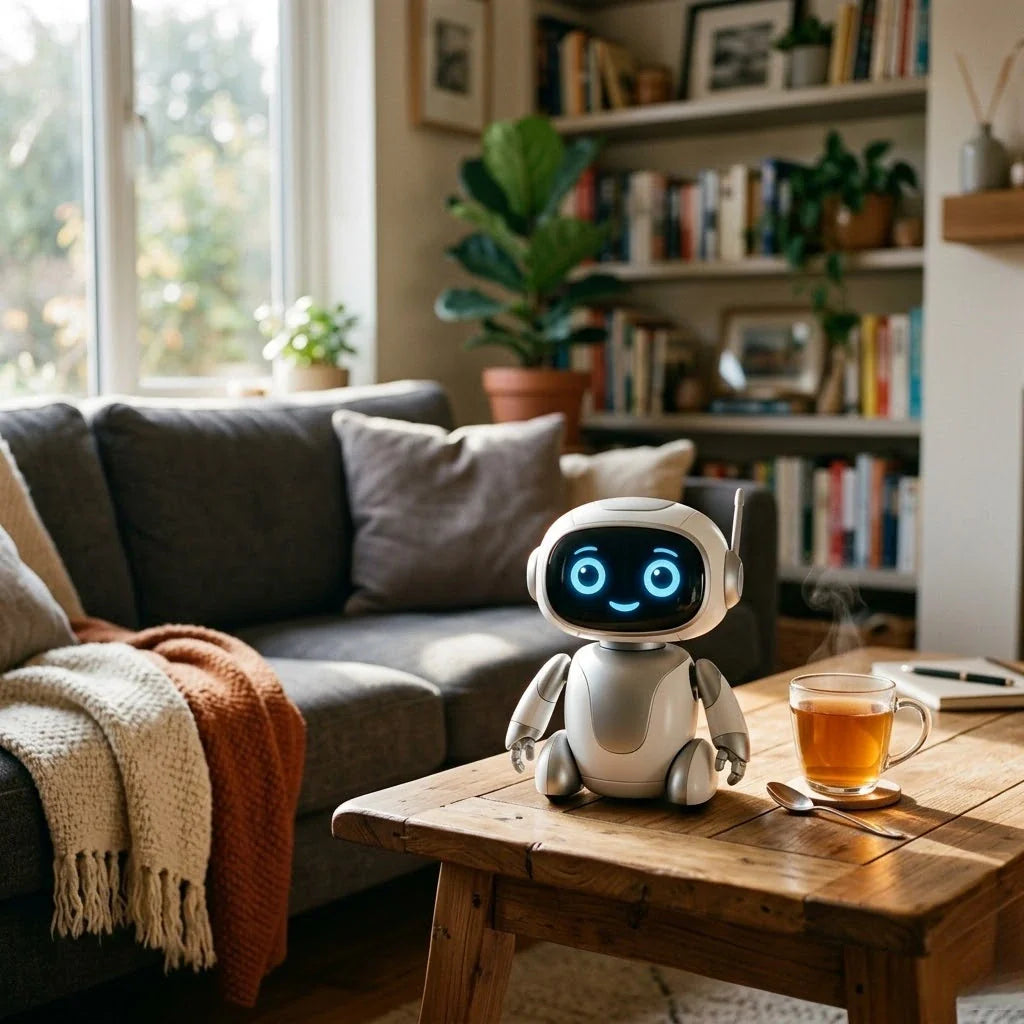
A desk robot is a compact robot made to live on a desk, table, or small workspace. It usually combines several technologies in one device, such as voice interaction, sensors, AI-powered responses, movement, and sometimes a screen or expressive face.
The idea is simple: make everyday interaction with technology feel more natural, visible, and engaging.
Some desk robots are built mainly for productivity. They help with reminders, routines, quick questions, and daily organization. Others lean more toward companionship, entertainment, or education. Many fall somewhere in between, offering a mix of practical assistance and personality.
That is what makes the category interesting. A desk robot is not only about function. It is also about presence.

How Is a Desk Robot Different From Other Smart Devices?
At first glance, a desk robot may seem similar to a smart speaker or a tablet with a voice assistant. But there are a few clear differences.
A smart speaker is mostly audio-based. You speak, it answers, and that is usually the end of the interaction. A desk robot often adds physical movement, visual feedback, and more expressive responses. It can turn toward you, react to touch, display emotion, or respond differently depending on what it senses.
Compared with a regular tablet or phone, a desk robot feels more active. You do not have to pick it up every time you want to interact. It is already there, ready to respond in a way that feels less like opening an app and more like engaging with a device that has a role in your space.
It is also different from a toy robot. While some desk robots are playful, many are designed with real daily use in mind. They can support work routines, learning habits, smart home tasks, and lightweight AI assistance.
How Does a Desk Robot Work?
Most desk robots rely on a combination of hardware and software to create a more interactive experience.
On the hardware side, many include microphones, speakers, cameras, touch sensors, or motion sensors. These let the robot hear commands, speak back, recognize presence, react to touch, or notice movement nearby.
On the software side, a desk robot may use voice recognition, computer vision, app connectivity, and AI models to understand requests and respond intelligently. Some handle simple commands on-device, while others use cloud-based systems for more advanced features.
That combination is what makes a desk robot feel different from standard desk gadgets. It is not only processing commands. It is responding through multiple channels at once.
For example, instead of just saying “Your next meeting starts in ten minutes,” a desk robot might also turn toward you, light up, animate a face, or use a specific tone that makes the reminder harder to ignore.
Key Features of a Desk Robot
Not every desk robot is built the same way, so it helps to know which features matter most.
Voice Interaction
Voice interaction is often the starting point. A good desk robot should be able to understand simple spoken commands and respond clearly. This can include setting reminders, answering questions, giving updates, or handling basic tasks without requiring you to open an app.
Natural voice interaction also makes a desk robot more useful during work or study sessions, especially when your hands are busy.
Movement and Expressive Behavior
One feature that sets a desk robot apart is movement. Depending on the design, that could mean head turns, body motion, animated eyes, gestures, or responsive posture.
This may sound cosmetic, but it changes the experience more than people expect. Motion helps the robot feel present, and that makes interaction feel more intuitive and memorable.
AI Assistance
Many people are interested in a desk robot because they want more than timers and weather updates. AI-powered features can help with quick questions, brainstorming, scheduling support, language practice, or personalized routines.
The level of intelligence varies by device, but stronger AI support can make a desk robot feel genuinely useful rather than just novel.
Sensors and Awareness
Some desk robots come with sensors that let them react to their environment. They may notice when someone approaches, respond to touch, recognize faces, or detect sound direction.
These features can make the device feel more responsive and less static, especially in shared workspaces or family settings.
Connectivity
A desk robot becomes more useful when it connects to the rest of your digital life. That may include a mobile app, Wi-Fi, Bluetooth, calendars, music services, or smart home controls.
The more smoothly it fits into your daily systems, the more value it tends to offer over time.
Personality and Customization
For many users, personality is not a bonus feature. It is part of the reason to buy a desk robot in the first place.
Custom voices, reactions, animations, routines, and personalized behaviors can make the robot feel less generic. That matters when the device sits in front of you every day.
Privacy Controls
Privacy should not be an afterthought, especially if the device has microphones or cameras. Good desk robots should make it easy to mute audio, manage permissions, or understand what data is being used and when.
For some users, this is the feature that determines whether they are comfortable bringing one into a workspace at all.
Benefits of Having a Desk Robot
The best desk robots offer more than one kind of value. That is part of what makes them appealing.
A More Engaging Way to Get Help
A desk robot can make simple assistance feel more natural. Asking for a reminder, a quick fact, or a calendar check often feels easier when the device is visible, responsive, and always within reach.
That convenience may sound small, but over time it can reduce friction in your daily routine.
Better Focus and Routine Support
For people who work long hours at a desk, routine support is a real benefit. A desk robot can remind you to take breaks, stretch, drink water, switch tasks, or prepare for meetings.
These small nudges can help structure the day without feeling too mechanical.
Companionship During Solo Work
Remote work has many advantages, but it can also feel oddly quiet. A desk robot adds a sense of presence to the workspace. Even when it is not actively helping, it can make the environment feel less empty.
That may not matter to everyone, but for people who spend hours working alone, it can make the desk feel more human.
More Interactive Learning
Desk robots can also be useful in education. They can support reading practice, language learning, study routines, and question-based interaction in a way that feels more lively than a standard screen.
For kids, that often means greater engagement. For adults, it can make learning feel less repetitive.
A Blend of Utility and Personality
One of the strongest benefits of a desk robot is that it combines function with character. Many devices can deliver information. Fewer can do it in a way that feels expressive, visible, and enjoyable.
That blend is exactly why desk robots attract people who are tired of flat, purely functional interfaces.
Everyday Uses of a Desk Robot
A desk robot can fit into daily life in more ways than most people expect.
At Work
In a work setting, a desk robot can help with reminders, time blocking, quick questions, meeting alerts, and basic productivity support. It can sit beside your monitor and act like a light assistant throughout the day.
For remote workers, this can be especially useful. The device stays in sight, which makes prompts and updates easier to notice than phone notifications that get ignored or buried.
During Study Sessions
Students can use a desk robot to support study habits, practice vocabulary, review simple concepts, or maintain better focus. A visible, interactive device can help break the monotony of long study blocks and make routines easier to stick with.
That is particularly helpful for younger users who respond better to interaction than to static instructions.
At Home
Outside of work and study, a desk robot can also serve as a small home assistant. It may answer everyday questions, share the weather, play music, manage simple smart home tasks, or offer entertainment between other activities.
Because it is designed for close-up interaction, it often feels better suited to personal spaces like desks, side tables, or shelves than large room-based devices.
As a Companion Device
Some people are drawn to desk robots less for productivity and more for presence. They like the responsiveness, the expressions, the movement, and the sense that the device is part of the room rather than just another piece of hardware.
This use case is easy to underestimate, but it is one of the reasons desk robots continue to grow in appeal.
For Families and Kids
In family settings, desk robots can support storytelling, simple games, educational interaction, and curiosity-driven questions. They often become devices that multiple people want to interact with, not just one owner.
That shared appeal can make them more versatile than single-purpose desk gadgets.
Desk Robot vs. Smart Speaker
People often ask whether a desk robot is really different from a smart speaker. The answer is yes, though the right choice depends on what you want.
A smart speaker is great for straightforward voice commands. It is usually more affordable and works well if you only need music, alarms, weather, or basic home control.
A desk robot offers a broader kind of interaction. It can respond with movement, visual cues, and more personality. In many cases, it is designed not just to answer commands but to become part of your daily environment.
If your priority is low-cost utility, a smart speaker may be enough. If you want a device that feels more interactive, expressive, and present on your desk, a desk robot is the stronger fit.
Who Should Use a Desk Robot?
A desk robot is not for everyone, but it can be a great fit for certain users.
It makes sense for remote workers who spend long stretches at a desk and want a more engaging assistant nearby. It can also be a good option for students, tech enthusiasts, families, and anyone who enjoys devices with more personality than standard smart products.
On the other hand, if you only want the cheapest possible voice assistant, a desk robot may feel like more device than you need. The same is true if you prefer minimal technology on your desk or feel uncomfortable with connected devices that use microphones or cameras.
The best fit usually comes down to expectations. A desk robot works best when you want both function and interaction.
What to Consider Before Buying a Desk Robot
Before choosing a desk robot, it helps to think beyond appearance.
Start with your main use case. Do you want help with work, learning, entertainment, companionship, or a mix of all four? That answer will guide nearly every other decision.
Next, look at the interaction style. Some robots focus on voice. Others emphasize movement, visual expression, or app-based customization. A robot that looks impressive but does not match how you actually want to use it can wear off quickly.
Connectivity also matters. Make sure the robot works with your phone, network, and any services you already use. If it supports smart home features, check compatibility before assuming it will fit your setup.
Privacy should be part of the decision too. If the device includes a camera or always-on listening features, read the privacy controls carefully and choose a model that makes those controls easy to manage.
Finally, consider whether the value comes from utility, personality, or both. The best desk robot for one person may not be the best for another, because this category sits at the intersection of tech, routine, and personal preference.
Are Desk Robots Worth It?
For the right user, yes. A desk robot can absolutely be worth it.
It adds something most desk devices do not: presence. That may come through movement, expression, voice, or simple responsiveness, but the result is the same. The interaction feels more alive.
If you want a desk companion that can support routines, answer questions, encourage focus, and make your workspace feel more interactive, a desk robot offers real value. If you only need basic commands and do not care about engagement, a simpler device may be the better choice.
In other words, a desk robot is worth it when you want technology that does not just work for you, but also works with you in a more visible and human-feeling way.
Conclusion
So, what is a desk robot?
At its core, it is a compact interactive robot designed to sit in your personal space and make technology feel more responsive, expressive, and useful. It can help with work, support learning, add companionship, and bring a little more life to the desk you use every day.
That is why interest in desk robots keeps growing. They are not just about automation. They are about creating a more engaging relationship between people and the devices around them.
As the category continues to evolve, desk robots are likely to become more capable, more personalized, and more woven into everyday routines. For users who want something beyond a screen or speaker, they already offer a compelling glimpse of that future.
FAQs
What does a desk robot do?
A desk robot can answer questions, give reminders, support routines, provide entertainment, respond to voice commands, and interact through movement or visual feedback. The exact features depend on the model.
Is a desk robot the same as a smart speaker?
No. A smart speaker is mostly audio-based, while a desk robot often adds movement, expression, sensors, and a more visible interactive presence.
Are desk robots useful for work?
Yes, many desk robots are useful for work. They can help with focus sessions, reminders, schedules, light AI assistance, and day-to-day organization.
Do desk robots need Wi-Fi?
Many do need Wi-Fi for full functionality, especially if they rely on cloud-based AI or connected services. Some features may still work locally depending on the device.
Are desk robots safe for privacy?
That depends on the brand and model. It is important to review privacy settings, microphone controls, camera permissions, and data policies before buying.
What features should I look for in a desk robot?
The most important features usually include voice interaction, expressive behavior, AI assistance, sensors, app connectivity, customization, and clear privacy controls.